
Related on 4X4 Specialist
- ACE System Repair vs Bypass – Which Is Right for Your Range Rover?
- Range Rover ACE System Warning Light – What It Means & What to Do
- Read: Discovery 5 Air Suspension Faults – Common Issues & Repair Costs
→ ACE (Active Cornering Enhancement) repair · Browse our full Land Rover & Range Rover knowledge base

ACE System Hydraulic Leak: Why Leaving It Alone Destroys the Pump
If you spot a reddish drip under your L322 or L320, do not assume it is just a small weep. The Range Rover ACE system hydraulic leak is the silent fault that turns a cheap hose job into a pump replacement if left. ACE uses ATF-grade hydraulic fluid and an engine-driven pump that depends on a steady fluid supply for lubrication and cooling. Tackle a leak early and you will save significant time and money.
Short answer: Yes, a leak will kill the pump fast
Short answer first: a persistent range rover ace system hydraulic leak can destroy the ACE pump in days or a few hundred miles, not years. On most ACE-equipped Range Rovers the reservoir only holds around 1 litre, so fluid level drops quickly under a continuous weep.
That pump is engine-driven and runs whenever the engine is on, supplying pressure to the valve block and active anti-roll bar actuators on L322 and L320 models. Once the pump starts drawing air the internals overheat and fail.

How the ACE system and pump work
ACE stands for Active Cornering Enhancement, it uses hydraulic pressure to shift load between the front and rear anti-roll bars for flatter cornering. The engine-driven pump feeds a valve block which routes pressure to the bar actuators on L322 and Sport L320 cars.
The same fluid both transmits pressure and lubricates the pump internals; on older models the pump setup can be tandem with power steering but ACE has its own reservoir and ATF-grade reddish fluid, which makes diagnosis easier.
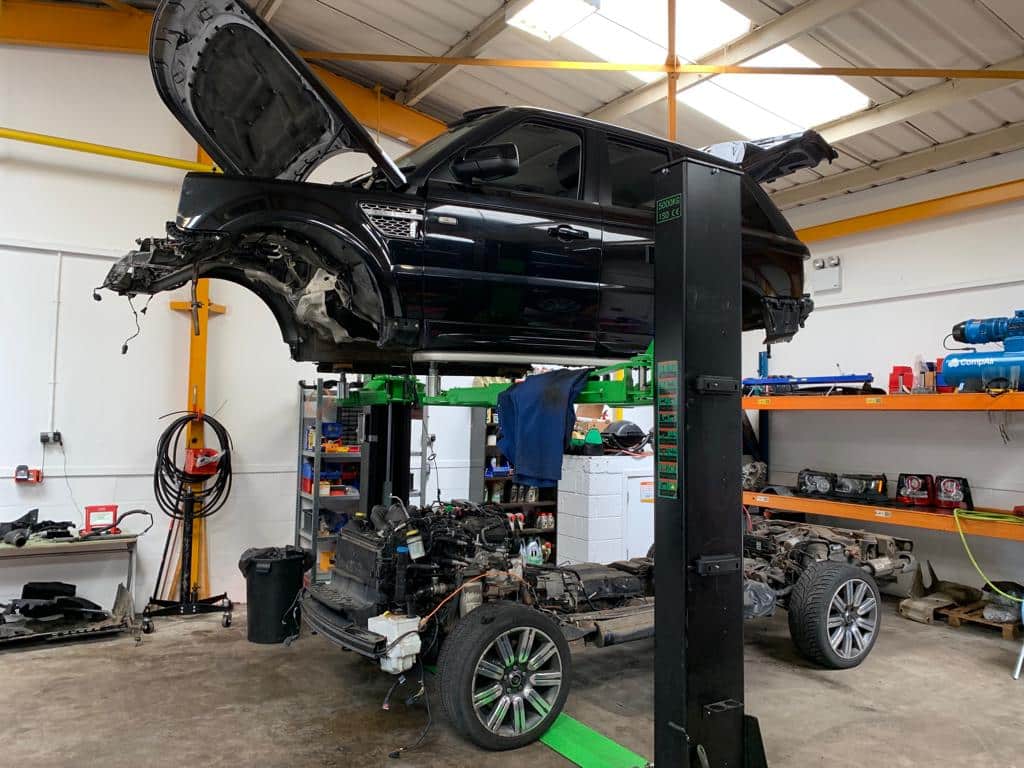

ACE fluid is reddish and ATF-grade; red drips or an ATF smell after a run mean inspect the ACE reservoir and hoses immediately.
Why low fluid causes cavitation and rapid pump failure
When the reservoir falls below the pickup, the pump draws air. Air causes cavitation inside the pump; cavities collapse and generate heat and shock, quickly scoring seals and bearings. Cavitation damage can occur within minutes under load.
A cavitated pump overheats because the ATF-grade fluid normally cools the rotating parts; once seals fail the pump can seize, and a seized pump may snap the ancillary drive belt, adding alternator or water pump bills to your problems.


Symptoms to spot early
Common early signs of a range rover ace system hydraulic leak are reddish oil drips, a faint ATF-like smell after a run, and an intermittent ACE warning light-often triggered under hard cornering or hot weather on L322 and L320 models.
You may also notice increased body roll in corners or a slower-than-normal ACE response. Check the ACE reservoir level; if it is down from full by a third you are already at risk of air ingestion.
Quick owner checks
Park on a clean surface, wipe suspected areas, then run the engine and cycle steering slowly; look for fresh reddish drips from high-pressure hose runs near the valve block or under the front bumper cooler line. Distinguish ACE fluid from amber power steering fluid by colour and by checking the separate reservoirs.


The engine-driven pump relies on the fluid for lubrication and cooling; even a brief dry run can cavitate and seize the pump.
Where leaks usually start on L322 and L320
Most leaks originate at the rubber high-pressure hoses between pump and valve block, these rubber sections perish from engine heat on L322 and Sport L320 cars. Other frequent points are valve block O-rings and the small actuator seals on the active anti-roll bar pistons.
Cooler lines routed near the front bumper and alloy hard-lines at their joints also fail with age. A visual check will show external weeps, but we pressure test to find the exact source rather than guessing.

Diagnosis: pressure testing and reservoir checks
We use low-pressure and functional pressure testing to pinpoint leaks rather than relying on visual inspection alone. Running the system under test pressure reveals leaks at hose fittings, O-rings, or actuator pistons on L322 and L320 cars.
Always check the reservoir level and fluid type first: ACE fluid is reddish ATF-grade and sits in its own reservoir. On older tandem-pump cars check both reservoirs to rule out a power steering drop; colour and reservoir location tell you which system is losing fluid.
When to call a specialist
If you see red drips, an intermittent ACE light, or the reservoir is low, book a pressure test immediately. Early hose replacement or a valve block reseal is far cheaper than a pump swap later.

Use pressure testing to find the leak at hoses, valve block O-rings, or actuators rather than relying on visual checks alone.
Temporary fixes: topping up, risks and rules
Topping up the ACE fluid can buy you short-term time, but it is not a repair. Use the correct ATF-grade ACE fluid only; incorrect fluid will swell or harden seals on L322 and L320 pumps and accelerate failure.
Do not overfill the reservoir because heat expansion needs headroom. Remember that topping up hides the rate of loss; every top-up is fluid that will end up on the road and into the cooler or valve block if not fixed.
Safe short-term procedure
Top up only to the correct mark with the right ATF-grade fluid, then drive gently to your repairer. Avoid hard cornering and long motorway runs; even brief dry running under load risks immediate pump seizure.

Repair options and preventing pump failure
If caught early the fix is usually hose replacement, valve block O-ring renewal or actuator seal kits; those repairs are commonly under a few hundred pounds plus fluid. Once the pump has been damaged by running dry, replacement costs rise substantially and you still must fix the original leak.
Preventive measures include visual hose checks at every service, replacing rubber hose sections that show cracking near heat sources, and including ACE fluid level checks during routine servicing on L322 and L320 vehicles. Pressure-test the system if you plan to keep the vehicle long-term.
Parts and workshop work
Hose kits and O-ring kits are straightforward to fit on a ramp and typically take 1-3 hours depending on access. We always pressure-test after repairs and top the system to the correct level to avoid air traps.
Quick comparison: early repair vs pump replacement
| Issue | Typical fix | Cost implication |
|---|---|---|
| High-pressure hose or O-ring leak | Hose kit or O-ring reseal, pressure test, top up fluid | Often under a few hundred pounds plus fluid |
| Actuator seal leak | Actuator seal kit and valve side inspection | Moderate labour, still controlled cost if early |
| Pump destroyed by air ingestion | Full pump replacement and original leak repair | Significantly more expensive and time-consuming |
Frequently Asked Questions
How do I know if my Range Rover has an ACE hydraulic leak?
Why does an ACE hydraulic leak destroy the pump?
How much fluid can the ACE system lose before the pump fails?
Where do ACE hydraulic leaks usually come from?
Can I just keep topping up the ACE fluid until I get it fixed?
What’s the difference between an ACE pump leak and a power steering leak?
How much does it cost to fix an ACE hydraulic leak?
Where should I take my Range Rover for an ACE leak repair?
Final Thoughts
A range rover ace system hydraulic leak is simple to fix if caught early, but lethal to the pump if left. Check for reddish drips, smell, and low reservoir level; pressure-test to locate the fault; and replace perished hoses or seals at once. Acting quickly keeps repairs measured and inexpensive.
Need an ACE system check or repair?
4X4 Specialist in Alva covers ACE repair and diagnosis for L322 and L320 Range Rovers. We pressure-test, replace hoses or seals, and only top up with the correct ATF-grade ACE fluid. Call 01786 625624, or visit https://4×4-specialists.com/active-cornering-enhancement/ to book a diagnostic and quote.
Sources
- acepumps.com technical bulletin – Technical notes on ACE pump operation and failure modes
- Land Rover owner forum discussions – Owner reports of common ACE leak points and symptoms
- LandyZone topic thread – Community troubleshooting and repair experiences
- YouTube demonstration – Visual examples of ACE leaks and pump replacement procedures