
Related on 4X4 Specialist
- Discovery 5 Air Suspension Faults – Common Issues & Repair Costs
- Do Larger Wheels Actually Damage a Range Rover’s Air Suspension?
- Read: Off-Road Tyre Damage – What It Does to Air Suspension & ADAS Sensors
→ Range Rover air suspension repairs · Browse our full Land Rover & Range Rover knowledge base

Why Is My Range Rover Sagging on One Side? Air Spring or Compressor?
Seeing your Range Rover sagging on one side first thing in the morning is alarmingly common. Picture an L322 or L405 parked with the nearside sitting noticeably lower than the others; that one-corner drop usually points to a local air leak, valve block fault or a dodgy height sensor rather than the compressor. Read on for a short answer, practical checks you can do at home, and clear guidance on when to book a diagnostic with the pros.
Short answer: air spring, valve block or sensor, rarely the compressor
Quick answer first: a Range Rover sagging on one side overnight most often means a slow leak at that corner’s air spring, an internal leak in the valve block feeding that corner, or a faulty height sensor on that corner. Models affected include the L322, L405 and L494; original air springs on these cars commonly reach 70,000 to 120,000 miles before failure.
The compressor usually causes an even sag across all corners when it fails. If only one corner is low, suspect a local component; compressors more typically begin to struggle around 80,000 miles on older L322 units, where piston seal wear makes pump times much longer.

How the Range Rover air suspension works in plain terms
The system has four height sensors, four air springs, air lines, a central valve block and a compressor with a reservoir. Each corner sensor reports body-to-axle distance to the ECU; if a sensor fails or reads incorrectly the ECU can be convinced the corner is fine when it is low. JLR EAS systems on L322 and L405 use one sensor per corner and a multi-valve block that isolates corners.
Valve block faults, clogged solenoids or split lines allow the pressure at one corner to bleed away even while the compressor and reservoir remain healthy. That is why you can often start the car and see the compressor run for a short while as it corrects the visible drop, especially on models with a working reservoir.


If your Range Rover is sagging on one side, start by checking the air spring, valve block and height sensor at that corner before blaming the compressor.
Most common causes when your Range Rover is leaning to one side
Air spring failure: rubber bellows crack from age, heat or salt; expect originals on L322s to often need replacing by 100,000 miles. A torn bag will leak slowly overnight and let the corner sag.
Valve block or solenoid leak: internal seals, blocked ports or corroded electrical connectors cause one corner to lose pressure even when the compressor is nominal; valve block faults are common on Discovery 4 and L405 platforms.
Height sensor faults: a stuck or corroded sensor on the low corner reports incorrect geometry; sensors are cheap and quick to swap, and misreadings can also force the system into constant hunt mode.
Air line or connector split: road stone damage or chafing can split a hose at the wheel arch; a puncture in the line will mimic an airbag leak but is usually quicker to spot with a hissing test.

Practical, at-home checks you can do right now
Morning check: photograph or measure ride height on both sides with the car cold and parked on level ground; if the nearside is low after an overnight stand the leak is slow and local. This is especially useful on L322s where overnight sag is common.
Soapy water test: spray soapy water on the air spring, the air line joint and the valve block ports; bubbles mean a leak. Concentrate on the wheel-arch area and the line unions; faults here are often visible on the L405 and L494.
Listen and time the compressor: start the car and time how long the compressor runs to correct height. A working compressor that stops after 30 to 90 seconds suggests the pump and reservoir are OK; run times consistently over 2 minutes on an older L322 hint at compressor wear.
Fuse pull trick: inflate the car to height, then pull the air suspension fuse. If the low corner drops while the other corners hold height, the valve block or line at that corner is likely leaking rather than the bag.
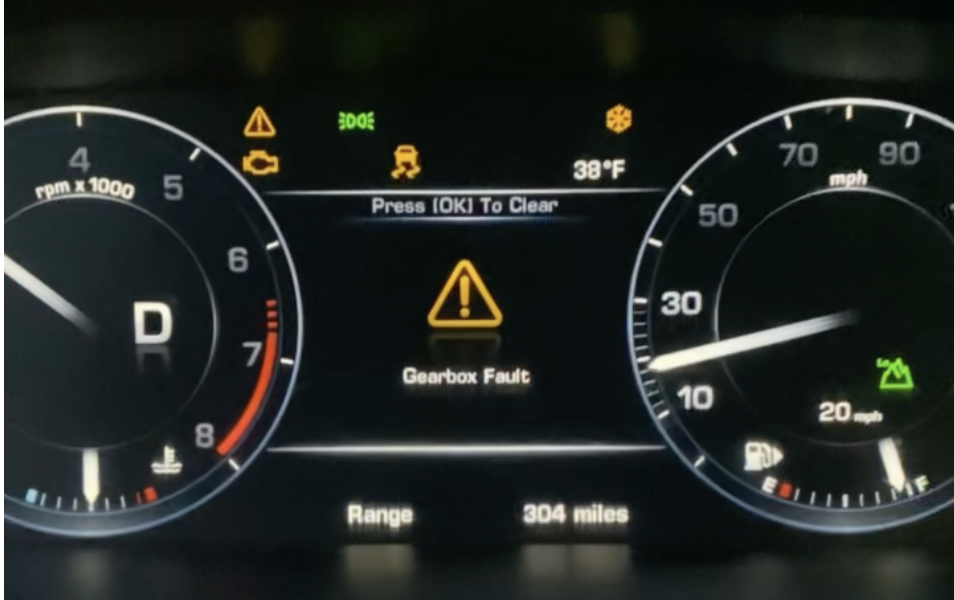

Use a soapy-water test, listen for hissing in the wheel arch and try the fuse-pull trick after inflating to isolate valve block leaks.
When the compressor is actually at fault
Compressor failure usually shows as a general sag across both axles, a compressor that runs continuously or a compressor that struggles to build pressure from cold. On L322 examples with 80,000+ miles, piston seals and the motor often wear and the unit will run long and hot.
To confirm compressor health, watch pump time with the car cold and the reservoir empty, and check for fault codes with a JLR-capable scanner for codes like U0122 or B11C that can indicate communication or pressure issues. If the vehicle refuses to rise on start-up, or takes unnaturally long to reach height, treat the compressor as the primary suspect.

Repair choices: single air spring, axle pair or full set
Replace the failed part only when reasonable: if one bag has split on an L322 with 40,000 miles left on the others, fitting a single bag is practical. If the other springs are original and over 80,000 miles, replacing the pair on the same axle or all four avoids mismatched ride and repeated labour costs.
Valve block or line repairs are often quicker and cheaper than bags. Changing one solenoid or repairing a hose union on an L405 takes less time than replacing the bag, and is commonly completed within a single workshop visit. We recommend an OE-quality replacement bag for L322 and L494 models to match damping and longevity.
Labour times and what to expect
Typical labour for a single air spring swap is 1.5 to 2.5 hours on older L322 vehicles, and 2 to 4 hours on L405/L494 due to additional anti-roll and sensor geometry work. Valve block repairs or line swaps are usually under 2 hours.
If the compressor is replaced, allow 3 to 5 hours depending on access and whether reservoir plumbing needs renewal; always ask for a pressure test and a leak trace after fitting.

Driving with a sagging corner increases tyre, bearing and bush wear and can overwork the compressor; get a diagnostic within days, not weeks.
Risks of driving with a Range Rover one corner low
Short trips at low speed are manageable, but prolonged driving with a one-corner low condition accelerates tyre wear on the low side and increases load on that wheel’s bearing and suspension bushes. This is especially consequential on heavy models like the L405 and long-wheelbase variants.
A persistently sagging corner makes the compressor run more often as it tries to correct the imbalance, which can burn out the pump motor prematurely on compressors already past about 80,000 miles. Handling and braking balance are also affected, so avoid long journeys or high-speed driving until repaired.
Preventive maintenance to avoid the one-corner drop
Inspect bellows and lines annually after 50,000 miles, especially on L322s that see salted roads. Clean and protect height sensor pivots and electrical connectors yearly to prevent corrosion; a corroded sensor pivot is a common failure point on cars that have spent winters in cold climates.
If your vehicle is approaching 70,000 to 100,000 miles, budget for air suspension refreshes: replacing pairs or all four bags, renewing the valve block seals and testing the compressor will restore reliability and prevent inconvenient one-corner sagging.
Quick comparison: likely cause for a single-corner sag
| Component | Typical symptom | Quick on-car test |
|---|---|---|
| Air spring (bag) | Slow overnight drop at one corner; visible torn bellows; often on cars 70k+ miles, common on L322 | Soapy water at bellows; inflate car and watch corner; inspect bellows for cracks |
| Valve block / solenoid | Corner drops after fuse pull or immediately when compressor stops; electrical faults or corrosion on valve block | Inflate then pull suspension fuse; if corner drops while others hold, suspect valve block |
| Height sensor | Erratic ride height, constant hunt for correct height, one corner shows wrong value in live data | Cycle ride-height and watch sensor live data with JLR-capable scanner; inspect sensor arm and pivot for corrosion |
| Compressor | Whole vehicle sags, long pump times, loud continuous running, common on compressors with 80k+ miles | Time pump duration cold start; if car refuses to rise or pump runs >2–3 minutes, suspect compressor |
Frequently Asked Questions
Why does my Range Rover sag on one side overnight?
How can I tell if it’s an air spring or the compressor causing one corner to drop?
Can a faulty height sensor make one corner sit low?
Is it safe to drive a Range Rover that’s sagging on one corner?
Should I replace all four air springs at once if one has failed?
Final Thoughts
A Range Rover sagging on one side is usually fixable without replacing the whole suspension; start with simple checks like a soapy-water test, listening for hissing and cycling ride height. Focus your attention on the bag, valve block and height sensor at the low corner, and only suspect the compressor when the whole vehicle is affected or pump times are abnormal. Early diagnosis saves tyres, bearings and wallet.
Book a diagnostic with 4X4 Specialist
Bring your Range Rover to our workshop in Alva Industrial Estate, FK12 5DQ, or call 01786 625624 to arrange a same-week diagnostic. We check EAS live data, pressure tests, valve block and air springs and give a clear, written quote before any work.
Sources
- General Land Rover owner forums and technical guides – Community reports and technical threads on L322, L405 and Discovery platforms.
- Technical how-to videos on air suspension troubleshooting – Walkthroughs showing soapy water tests, compressor timing and valve block checks.