
Related on 4X4 Specialist
- Charging System Fault on Range Rover MHEV – What Does It Mean?
- DC-DC Converter Failure on Land Rover MHEV – Symptoms Before It Dies Completely
- Read: Discovery Sport MHEV Fault – 48V Battery Issues & What It Costs to Fix
→ Land Rover EV/PHEV/MHEV repair · Browse our full Land Rover & Range Rover knowledge base

Range Rover Evoque MHEV Stop/Start Not Working: Causes and Fixes
Your Range Rover Evoque MHEV (L551) refuses to shut down the engine at the lights, or it shows ‘Stop/Start Unavailable’. I see this every week: most cases are repairable without a full drivetrain strip-down. Read this short, practical guide to understand why the range rover evoque mhev stop start not working, what you can check in the driveway, and when a proper 48V MHEV diagnostic is needed.
Short answer: most likely the 48V battery or the BiSG
Short answer first: the 48V mild-hybrid battery is the primary culprit on an Evoque MHEV that stops using stop/start, especially on cars over 3 years old; a weak 12V battery or a failed belt starter-generator, known as the BiSG, are the next most common causes.
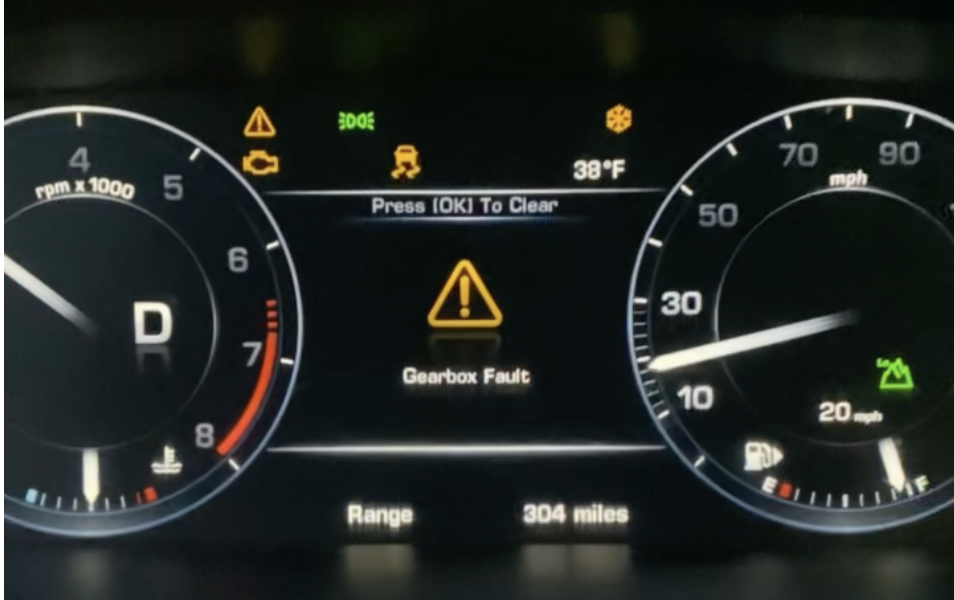
If your dash shows ‘Stop/Start Unavailable’ alone, the car is usually drivable; if it shows ‘Hybrid System Service Required’ act quickly because the 48V pack can progressively fail and leave you stranded.

How Evoque MHEV stop/start works in practical terms
The Evoque MHEV uses a 48V mild-hybrid system and a belt starter-generator (BiSG) instead of a conventional starter motor; the BiSG provides stop/start cranking and torque assist during acceleration on the L551 platform.
Stop/start requires two healthy battery systems: a 48V pack for the hybrid functions and a baseline 12V battery for vehicle electronics; if either battery is below its safe state-of-charge the system disables stop/start to protect components.


The 48V mild-hybrid battery is the most frequent cause of range rover evoque mhev stop start not working, especially on cars older than three years or those left idle for 2+ weeks.
Common causes and what each looks like
48V mild-hybrid battery degradation: the headline fault on an Evoque MHEV; vehicles over 3 years old or left sitting for 2+ weeks are at risk because the 48V pack will drop below safe SOC and store fault codes that disable stop/start.
Weak 12V battery: even though the Evoque is MHEV, the 12V battery still runs safety systems; a 12V with low cold cranking amps or a state-of-health below 60% will disable stop/start and often shows other electrical niggles.
Belt starter-generator (BiSG) faults: when the BiSG fails you may see cranking delays, limp-start behaviour or stored BiSG fault codes; the BiSG sits on the accessory belt and replacement is the most expensive mechanical fix.
Environmental and operational suppressors: very cold ambient temps, high cabin heating or AC demand, active DPF regeneration, steep gradients or repeated rapid stop/start cycling will intentionally suppress stop/start by design to protect battery and engine temps.
Sensor and electrical interlocks: door switches, seatbelt sensors and clutch/gear position switches are safety interlocks; a faulty door or seatbelt switch on the L551 will stop the system from engaging and store a related fault code.
Rapid cycling and thermal protection
Heavy slow traffic with rapid repeated stops forces the system into a temporary shutdown to avoid thermal stress on the BiSG and the 48V battery; this protection is normal but persistent shutdown after normal driving suggests an underlying fault.

Quick owner checks you can do at home
Check the message and other warnings: if only ‘Stop/Start Unavailable’ appears you can continue driving; if ‘Hybrid System Service Required’ or other hybrid warnings appear, arrange diagnostic within days. Note the exact text and any codes if shown.
Check 12V voltage: with ignition off a healthy 12V should measure around 12.5 to 12.8V; below 12.2V after standing suggests a weak battery. Replace 12V at 4 to 5 years proactively on high-mileage or short-trip cars.
Drive pattern test: do a single continuous drive of 30 to 45 minutes on a motorway or A-road to allow the 48V battery to reach proper SOC; if stop/start returns after that drive you likely had a low 48V state-of-charge rather than a hardware fault.


A 12V voltage check, a 30–45 minute road test and noting exact dash messages often separates convenience disablement from urgent hybrid faults.
Workshop diagnostics: what professionals check
We start with a JLR-capable scan tool to read MHEV codes and the BiSG data set, then run a state-of-health analysis on the 48V battery; MHEV fault codes stored in the ECU point directly to cells, balancing faults, or the BiSG.
Voltage under load tests and insulation checks follow; technicians measure 48V module voltage, individual cell imbalance and SOH percentage, plus 12V cranking current and BiSG waveform to confirm mechanical failure. Diagnostics typically take about an hour with a same-day quote.
Why a reset or relearn sometimes fixes it
After replacing a 12V or 48V battery the Battery Management System needs a relearn; incomplete relearn leaves stop/start disabled even with healthy batteries. A proper relearn and ECU soft reset using manufacturer-level tools can restore function without parts replacement.
Repair options and realistic expectations on cost
Common outcomes I quote: a 12V battery replacement or ECU relearn is the least expensive fix; a 48V battery module replacement is more costly and should be matched to OEM specs for cell chemistry and BMS calibration; BiSG replacement is typically the costliest due to parts and labour.
Labour and turnaround: expect an hour for full diagnostic, 1 to 2 hours for 12V replacement and relearn, several hours for 48V battery replacement, and longer for BiSG removal and refit; I always confirm a firm price after scanning because many expensive-sounding MHEV codes are solved by software updates or a 12V swap.
Parts choices
You can fit OEM-spec 12V and 48V modules or quality aftermarket 12V units; for the 48V pack and BiSG I recommend OEM or approved remanufactured units due to calibration, cell matching and warranty tracking.
Always run a JLR-capable MHEV scan and 48V SOH test; many costly-sounding issues are resolved with a software relearn or a 12V swap.
Preventive care to avoid stop/start faults
Drive strategy: avoid only short trips. I advise at least one 30 to 45 minute drive per week, and a longer run every fortnight to keep the 48V pack at healthy SOC; short-trip urban use accelerates 48V ageing.
Battery maintenance: replace the 12V battery proactively at 4 to 5 years on Evoque L551 models, and ask for an annual 48V health check from year three onward. Avoid leaving the car parked for 2+ weeks with a low fuel level; this accelerates 48V degradation.

When to book a professional diagnosis and local help
Book a professional check if you see ‘Hybrid System Service Required’, persistent stop/start disablement after a long drive, or if the car was left standing for 2+ weeks. These scenarios need a JLR-capable scan and 48V SOH test to avoid misdiagnosis.
If you want an independent specialist with full MHEV capability, learn more about our Land Rover EV and hybrid repair service at https://4×4-specialists.com/land-rover-ev-repair-specialist/. We perform MHEV diagnostics, 48V SOH checks and BiSG testing before quoting any repair.

Common Stop/Start Faults and First Actions
| Fault | Likely component | Owner action |
|---|---|---|
| Stop/Start Unavailable only | Low 48V SOC or battery ageing | Drive 30–45 minutes; book 48V SOH check if persists |
| Hybrid System Service Required | 48V pack or BiSG fault | Arrange diagnosis within days; avoid long-term parking |
| Intermittent start hesitation | Weak 12V or BiSG waveform issue | Measure 12V voltage; check for stored BiSG codes |
| Disabled during motorway DPF regen | DPF regeneration | No action; regen completes and stop/start usually returns |
Frequently Asked Questions
Why has my Evoque MHEV stop/start stopped working?
Is it safe to keep driving an Evoque with MHEV stop/start not working?
How much does it cost to fix Evoque MHEV stop/start?
What are the most common scenarios that trigger MHEV faults?
How can I prevent MHEV stop/start faults on my Evoque?
Do you cover MHEV work on other JLR models besides the Evoque?
Will independent MHEV repairs void my Evogue warranty?
Where do I book an MHEV diagnosis at 4X4 Specialist?
Final Thoughts
Stop/start failures on a Range Rover Evoque MHEV are rarely mysterious; start with simple checks, run a proper 48V SOH scan and only replace hardware when diagnostics point to it. Drive a little longer more often, keep the 12V in good health and you will avoid most visits to the workshop.
Book an MHEV diagnostic
If your range rover evoque mhev stop start not working or you have a hybrid system warning, book a one-hour diagnostic with full 48V SOH testing and BiSG data capture. We diagnose and explain options before any chargeable work.
Sources
- YouTube technical walkaround – Visual demonstrations of BiSG and 48V components
- Technical video on MHEV systems – Explains belt starter-generator behaviour and symptoms
- Owner-reported stop/start issues forum – Real-world fault patterns from owners
- Community thread on stop/start fixes – Examples of relearns and simple fixes