
Related on 4X4 Specialist
- All-Terrain Tyres on a Range Rover – What You Gain & What You Give Up
- Best Tyres for a Range Rover – Michelin vs Pirelli vs Continental Compared
- Read: Run-Flat Tyres on a Range Rover – Are They Worth It or Should You Switch?
→ Range Rover & Land Rover diagnostics · Browse our full Land Rover & Range Rover knowledge base
How Long Should Range Rover Tyres Last? What’s Normal and What’s Not
You park a heavy Range Rover on the drive and wonder, how long do Range Rover tyres last before they need replacing. For many owners the answer is not a single number; it depends on model, tyre type and how you drive. This guide gives clear mileages, common failure patterns and the checks that save you a four-figure tyre bill.
Short answer, then detail
Short answer: expect 20,000–30,000 miles on the rear tyres of a Range Rover Sport (L494) or full-size Range Rover (L405) with OE-spec road tyres, 25,000–35,000 miles on the fronts, and 30,000–40,000 miles on smaller Evoque/Discovery Sport fitments if driven sensibly.
If you run a Defender on aggressive all-terrain tyres plan for 15,000–20,000 miles in active use; tyres only lasting 15,000–20,000 miles on heavier SUVs is a common real-world complaint and usually points to alignment, pressure or suspension faults.

How model and tyre type change tyre longevity
Full-size Range Rover and Range Rover Sport carry more mass and AWD torque, so rear tyres wear faster; expect rear tyre life down by up to 25% compared with front fitments on the same car when driven enthusiastically.
Evoque and Discovery Sport, with lighter kerb weights and narrower tyres, often reach 30,000–40,000 miles on road tyres. Toyo AT III on a Discovery V reached 25,000 miles with around 50% tread remaining in hand-ling and rotation cases, demonstrating how tyre compound and use dictate life.
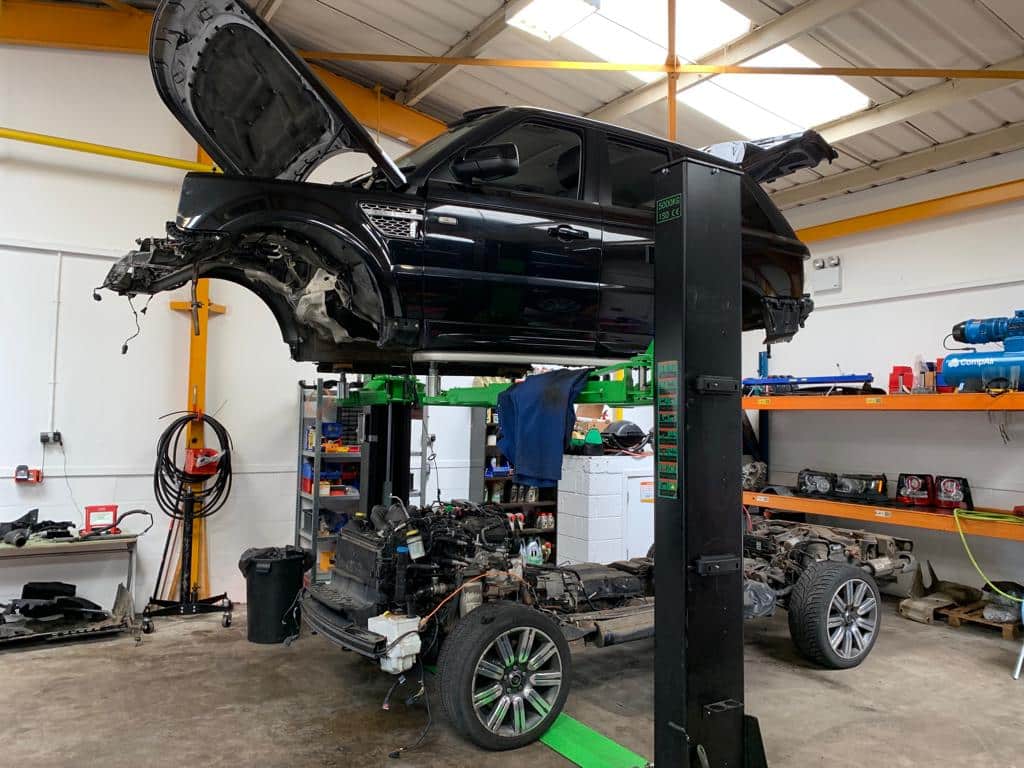

On heavy AWD Range Rovers the rear axle takes more torque and weight, so expect the rears to need replacement earlier than the fronts.
Main factors that drive a high wear rate
Tyre pressure: always set pressures cold to the door placard; over-inflation produces centre-strip wear, under-inflation eats the shoulders. A monthly cold pressure check prevents shoulder or centre wear patterns becoming permanent.
Alignment and suspension: have a four-wheel alignment annually or after any pothole strike; mis-set camber produces inner- or outer-edge wear and mismatched tread depths across an axle on AWD cars stresses the centre differential and transfer case.
Other contributors
Worn lower control-arm bushes on older L322/L405 examples cause inner-edge wear; air suspension faults that change ride height alter camber and accelerate one-sided wear.
Aggressive driving, heavy braking and hard cornering on a 2.5-tonne SUV will halve expected tyre life compared with sympathetic use.


How to spot premature or abnormal wear patterns
Inner or outer edge wear points to camber or toe faults; on L322 and L405 models this often coincides with worn suspension bushes or a bent arm after a curb strike.
Feathered or scalloped tread indicates wheel balance issues or loose/worn suspension; centre-strip wear is classic over-inflation while both-shoulder wear means under-inflation.
Quick owner checks
Measure tread at three points across the tyre; if you hit 3mm well under your normal mileage, or one tyre is visibly lower than its partner on the same axle, book an inspection.
If ABS or ADAS warnings appear after tyres look uneven, mismatched rolling radii can shift wheel-speed readings and trigger faults-this is why equal tread depth across an axle matters on AWD Range Rovers.

Monthly cold pressure checks to the door placard and rotation every 8,000–10,000 miles are the simplest, highest-return actions you can take.
Maintenance routine to maximise range rover tyre life
Routine: check cold tyre pressures monthly to the door placard; rotate tyres front-to-rear every 8,000–10,000 miles on AWD models to even wear between axles.
Checks: book a four-wheel alignment yearly and after any pothole or kerb strike; replace worn suspension bushes and get wheel balance checked if you detect vibration or scalloped wear.
Replacement thresholds
Legal minimum tread is 1.6mm, but for premium SUVs replace at 3mm for safe wet braking; if a tyre reaches 3mm significantly earlier than expected, investigate alignment, pressure and suspension rather than just fitting new rubber.
A tyre set discarded 10,000 miles early because of avoidable faults is a four-figure cost; a laser four-wheel alignment is a small fraction of that expense.


When to run diagnostics and alignment
Run a diagnostic if you see uneven tread across an axle, ADAS warnings, or air suspension fault codes; air suspension stuck at the wrong ride height changes camber and quickly chews inner edges, especially on L405 and L494 models.
If your Range Rover throws unexplained height or transfer-case warnings, unequal rolling radii from uneven tread depths can be the trigger; professional diagnostics plus a full alignment is often the fastest, most cost-effective cure.
Book a diagnostics check
If you need a combined ADAS, air suspension and tyre-wear assessment, our Range Rover diagnostics service covers wheel-speed input checks and alignment verification.

Hitting 3mm tread early should trigger alignment and suspension checks; fixing the root cause prevents another four-figure tyre bill.
Costs, quick fixes and when to call a specialist
Quick fixes: correct tyre pressures, a tyre rotation and a wheel balance often restore even wear progression; these are low-cost interventions compared with a premature full tyre replacement.
Call a specialist if you see one tyre down by several millimetres compared with its partner, inner-edge wear on multiple tyres, or recurring EAS/transfer-case warnings after a tyre change; unresolved problems will cost you a full set of premium tyres well into four figures.
Expected tyre mileage by model and tyre type
| Model / Tyre Type | Typical rear tyre mileage | Notes |
|---|---|---|
| Range Rover Sport (L494) / Full-size (L405) road tyres | 20,000–30,000 miles | Rear wear accelerates due to mass and AWD torque |
| Range Rover front fitments (same cars) | 25,000–35,000 miles | Fronts often outlast rears by a few thousand miles |
| Evoque / Discovery Sport | 30,000–40,000 miles | Lighter kerb weight and sympathetic driving boost longevity |
| Defender on all-terrain tyres | 15,000–20,000 miles | Aggressive AT compounds wear quickly on tarmac |
Frequently Asked Questions
How many miles should Range Rover tyres last?
How do I tell if my tyres are wearing too quickly?
How much does premature tyre wear actually cost?
What are the most common causes of premature tyre wear on Range Rovers?
Where do I book an alignment and tyre wear assessment at 4X4 Specialist?
Final Thoughts
Tyre life on a Range Rover is predictable when you control the variables: correct pressures, regular rotation, annual alignment and prompt suspension repairs. Spot abnormal wear early, diagnose the cause, and you protect both safety and a four-figure tyre bill.
Book a tyre wear check
If your tread is falling faster than expected, book a tyre wear and alignment assessment. Early diagnostics halve the chance of an early replacement.
Sources
- Owner forum tyre mileage reports – Real-world owner reports of tyre life on Range Rover Sport examples
- Land Rover owner forum tyre longevity thread – Thread documenting Toyo AT III reaching 25,000 miles with 50% tread in one case