
Related on 4X4 Specialist
- Charging System Fault on Range Rover MHEV – What Does It Mean?
- DC-DC Converter Failure on Land Rover MHEV – Symptoms Before It Dies Completely
- Read: Discovery Sport MHEV Fault – 48V Battery Issues & What It Costs to Fix
→ Land Rover EV/PHEV/MHEV repair · Browse our full Land Rover & Range Rover knowledge base
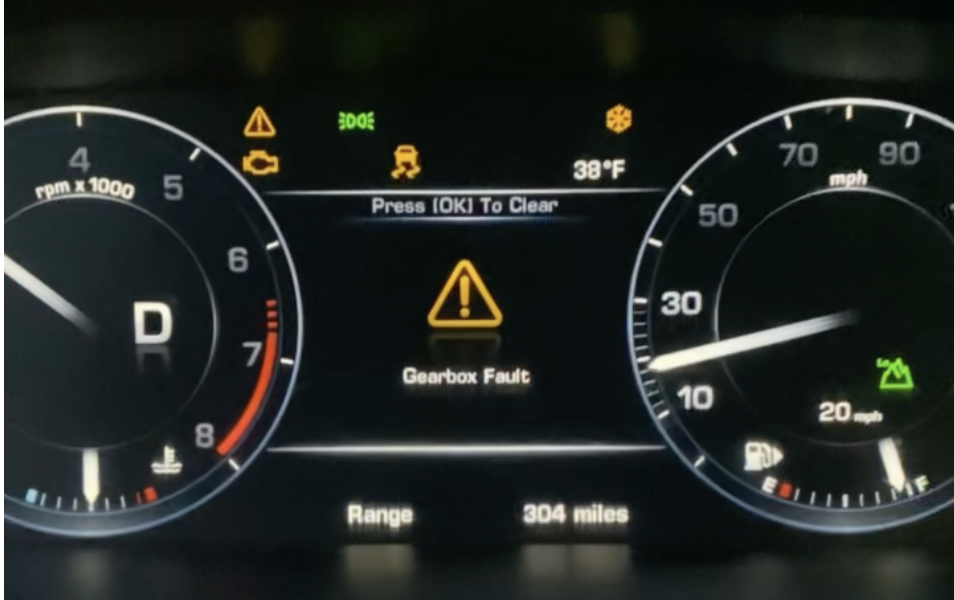
Range Rover MHEV Faults: What the Warning Messages Actually Mean
You saw an ‘MHEV System Fault’ or ‘Charging System Fault’ pop up on your dash and your heart dropped. Those messages point at the 48V mild-hybrid architecture, not a mysterious black box. Read on for a short answer, the likely culprits from the 12V AGM to the belt-driven starter generator, plus quick checks you can do at home before booking specialist diagnostics.
Short answer: what ‘range rover mhev fault warning messages’ mean
Short answer: your car’s MHEV control module has detected a fault in the 48V system; common suspects are the 48V battery, the DC-DC converter that maintains the 12V bus at about 13.8-14.6V, the belt-driven starter generator (BSG), or sensors in the 48V cooling and monitoring circuits.
Detailed check: note the exact message on the instrument cluster, then check the 12V battery voltage with a multimeter; anything below 12.4V at rest or failing to reach 13.8-14.6V while running points to charging problems. Record conditions like temperature, mileage and recent long periods of inactivity for the technician.

Common messages decoded: MHEV System Fault, Charging System Fault, Stop Safely Electrical Fault
‘MHEV System Fault’ is a generic flag the control module sets when any monitored parameter in the 48V system is outside expected limits; on L460, L461 and L560 models that often follows low 12V voltage or a BSG communications error.
‘Charging System Fault’ specifically means the 48V charging chain cannot maintain the 12V bus at 13.8-14.6V; the car will usually continue on engine power alone with the 12V battery supplying accessories until you can get it looked at.
‘Stop Safely Electrical Fault Detected’ frequently ties to internal DC-DC converter failures or damaged harness/connectors in the converter circuit; inspect for loose pins, corrosion or melted insulation before assuming a module replacement.
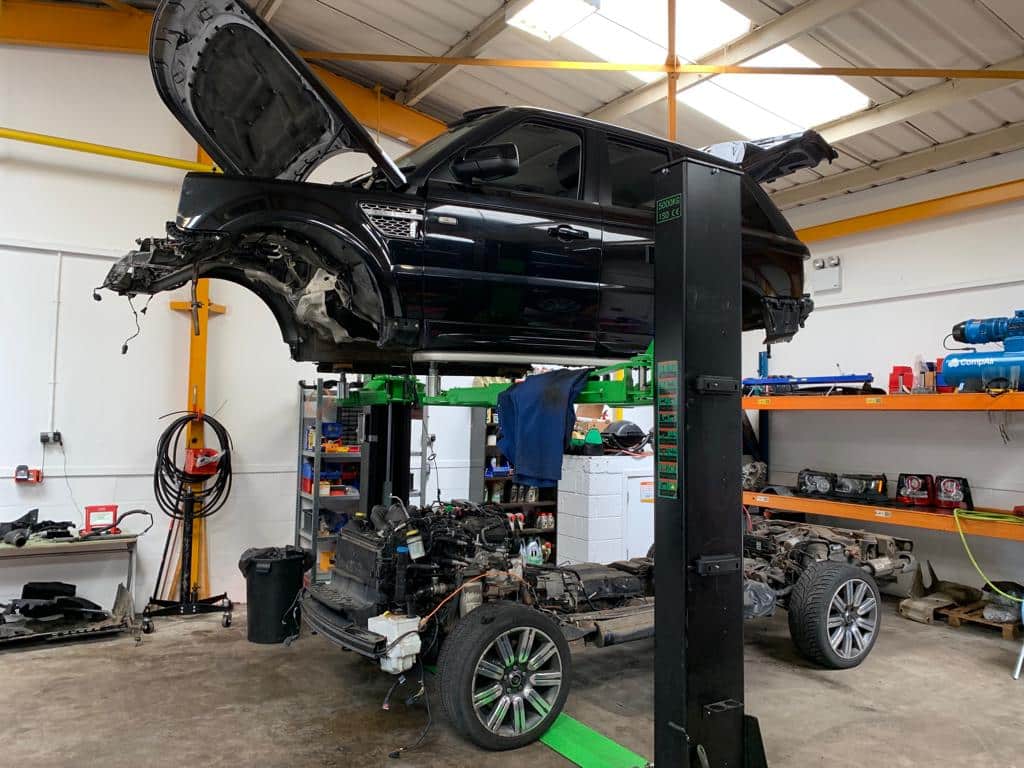

If you see ‘range rover mhev fault warning messages’ check the 12V resting voltage, record the exact dash text, avoid long storage without a smart charger and book a JLR-level diagnostic if the 12V reads below 12.4V or the 12V bus will not reach 13.8-14.6V while running.
What limited mode actually means for driving
Short answer: limited mode disables stop-start, removes 48V boost during acceleration and turns off regenerative braking, but the combustion engine will keep driving the car; you lose efficiency and some low-speed torque assist but the vehicle is generally drivable.
Practical checks: verify whether the car still starts normally, check for limp-home speed limits, and watch for additional warnings like red HV symbols, smoke or strong electrical smells; if those appear, stop immediately.

Top cause 1: 12V AGM battery problems and why they trigger MHEV faults
Why it matters: the 12V AGM battery supplies all control modules and sensors; a weak or failed 12V (common on cars used only for short trips) will cause the MHEV control head to flag charging or system faults even when the 48V stack is healthy.
Owner checks: measure resting voltage (12.4V is low; 12.0V is flat), perform a cranking test and consider age; replace proactively at around 4 years on vehicles used frequently for short runs, or fit a smart maintainer to prevent false codes.

Stop driving immediately and call for recovery if a red HV warning, smoke, strong burning smells or coolant leaks accompany the MHEV message.
Top cause 2: DC-DC converter faults and basic inspection steps
Symptoms: intermittent ‘Stop Safely Electrical Fault Detected’ messages, 12V not holding at 13.8-14.6V, or erratic accessory behaviour; these point to the DC-DC converter or its harness and connectors.
Hands-on checks: inspect the converter connectors for loose pins, burn marks or corrosion, check cooling ducts for debris and record live charging voltages where possible; replacing the converter or repairing the harness is common if internal faults are confirmed via live data.
When a simple connector clean helps
Many faults resolve after a secure connector re-seat and dielectric grease on exposed pins; if the converter’s internal electronics are damaged you will need module replacement and reprogramming.


Top cause 3: BSG, belt tensioner and Ingenium quirks
BSG notes: early Ingenium MHEV engines have known issues with the BSG belt tensioner; slack or worn tensioners cause charging faults and BSG error messages, especially on higher-mileage D300/D350 diesels in L460 and L461 models.
DIY checks: look for audible belt squeal, inspect the tensioner for play and check for debris in the undertray; replacement typically requires removing the BSG assembly and may need a specialist press and JLR module relearn.

48V battery and cooling faults: cell imbalance, air locks and temperature warnings
48V battery issues: long periods of inactivity can lead to cell imbalance and low 48V pack state-of-charge; symptoms include ‘Low Battery’ warnings and inability to accept charge until the pack is balanced or charged with specialist equipment.
Cooling system: the 48V pack and DC-DC converter have dedicated cooling; air locks, pump failures or coolant leaks produce temperature-related warnings and must be addressed promptly to avoid pack damage.

Diagnostics, live data and software: how we pin down the fault
Short flow: we run a full MHEV system health test with manufacturer-level tools (JLR TOPIx live data) to read specific MHEV codes, capture voltage traces, cell voltages, DC-DC temperature and BSG status before any parts are quoted.
Software and specialist repair: many faults resolve after module updates or recalibration; for Land Rover EV and hybrid repairs book a dedicated MHEV diagnosis with an HV-trained technician via our Land Rover EV and hybrid repair specialist page, where we document live data and module programming for warranty traceability.
Safety, prevention and quick owner checks
Immediate safety: stop and call if you see a red HV warning, smell burning or coolant, or notice smoke from the engine bay; otherwise limited mode is safe for short trips to a workshop.
Prevention: replace the 12V AGM at around 4 years if used for short journeys; drive the vehicle regularly so the 48V pack cycles; fit a smart maintainer during storage and include 48V cooling checks in routine servicing to avoid air locks.

Common MHEV Faults, Symptoms and Typical Fix Path
| Fault | Symptoms | Typical Fix |
|---|---|---|
| Weak 12V AGM | False MHEV codes, inability to crank, low resting voltage | Replace AGM (age ~4 years) or fit smart maintainer |
| DC-DC converter failure | ‘Stop Safely Electrical Fault’, 12V not charging to 13.8-14.6V | Inspect connectors/harness, replace converter and reprogram |
| BSG / tensioner wear | Charging errors, belt noise, BSG fault codes on Ingenium engines | Replace tensioner/BSG assembly, module relearn |
| 48V pack cell imbalance | Low 48V warnings after long storage, reduced 48V assist | Specialist pack conditioning or cell/module replacement |
| Cooling circuit fault | Temperature warnings, pump noise, coolant loss | Bleed circuit, repair pump or hoses, check for leaks |
Frequently Asked Questions
What does an ‘MHEV System Fault’ warning actually mean?
Is it safe to drive with an MHEV system fault?
How much does it cost to fix an MHEV fault?
What are the most common causes of MHEV faults?
How do I book an MHEV diagnosis at 4X4 Specialist?
Final Thoughts
MHEV warning messages are unsettling but often solvable, usually starting with the 12V battery, a connector or a DC-DC hiccup rather than catastrophic HV failure. Use the checks above, act quickly on temperature or smoke warnings, and get a proper live-data diagnosis so you avoid unnecessary parts replacement.
Book an MHEV diagnosis
If your dash shows ‘MHEV System Fault’ or related messages, book a specialist diagnosis so we can capture live data and quote accurately.
Sources
- 4×4 Specialists charging system fault article – Independent garage notes on charging faults and owner checks
- NHTSA technical service bulletin 2025 – Manufacturer bulletins covering MHEV electrical issues
- NHTSA technical service bulletin 2026 – Follow-up TSBs describing DC-DC converter and software fixes