
Related on 4X4 Specialist
- Can You Replace Just One Tyre on a Range Rover AWD? – What You Need to Know
- Pothole Damage on a Range Rover – When to Replace vs Repair a Tyre
- Read: Range Rover Tyre Pressure Warning – TPMS Fault vs Actual Puncture
→ independent Range Rover specialist · Browse our full Land Rover & Range Rover knowledge base
Range Rover Vibration at Speed: Is It the Tyres or Something Else?
You feel a shimmy through the steering wheel at around 50 to 55 mph, or a buzz through the seat on the motorway. That speed band is a classic clue: many Range Rover vibration at speed tyres complaints point to wheel or tyre imbalance, but not always. This note gives short answers, clear checks you can do on the drive, and when to bring the car in for a proper road-test.
Short answer: tyres first, then everything else
If the shake arrives in a narrow speed band, commonly 50 to 55 mph, start with wheel and tyre balance; out-of-balance tyres transmit directly into the steering wheel and the whole vehicle.
If vibration is through the seat but not the wheel, think rear wheels or the propshaft on permanent AWD models; if it only shows under braking, suspect warped rotors.

Wheel balance and lost weights: the usual suspects
An out-of-balance tyre creates a cyclic force because the wheel assembly no longer rotates around its true centre; you will commonly notice steering wheel vibration between 50 and 70 mph. A quick visual check for missing clip-on or adhesive wheel weights is worth doing first.
Confirming balance requires a road test at about 50 mph after setting tyre pressures to the cold specification shown on the door placard; technicians then rebalance on a machine, a low-cost fix that usually removes the shake.


Vibration starting around 50–55 mph most often points to wheel or tyre imbalance; note the exact speed when it appears.
Temporary flat-spotting versus internal tyre damage
Cold weather or long parking can create temporary flat spots; that cyclical thump at low speed often clears after about 10 to 16 km of steady driving as the tyre warms and regains shape.
If the thumping persists at all speeds or you see a bulge/odd wear pattern, suspect internal belt damage or a broken cord from a pothole or kerb strike; those tyres usually need replacement rather than repair.


Wheels, hub fitment and incorrect refitting
After a tyre change vibration often follows because the wheel was not properly rebalanced, a wheel weight fell off, or the hub flange had corrosion so the wheel sat slightly off-centre; always clean the hub flange before refitting and check for missing weights.
Retorque wheel fasteners to the manufacturer’s spec and then again after roughly 50 miles; improper torque or uneven torqueing can let a wheel sit crooked and cause speed-specific vibrations.

If the seat vibrates but the wheel does not, prioritise rear wheels and the propshaft on permanent AWD models.
Suspension bushings, control arms and brake discs
Worn lower control-arm or radius-arm bushes and tie-rod play permit movement that shows up as vibration at speed; MOT-advisory bushes that are allowed to progress often cause mid-speed shudder and uneven tyre wear.
If vibration only appears or worsens under deceleration, warped brake rotors are likely; runout transfers through the suspension and is felt as a judder when braking rather than a constant shake on the motorway.

Driveshaft and propshaft issues on AWD models
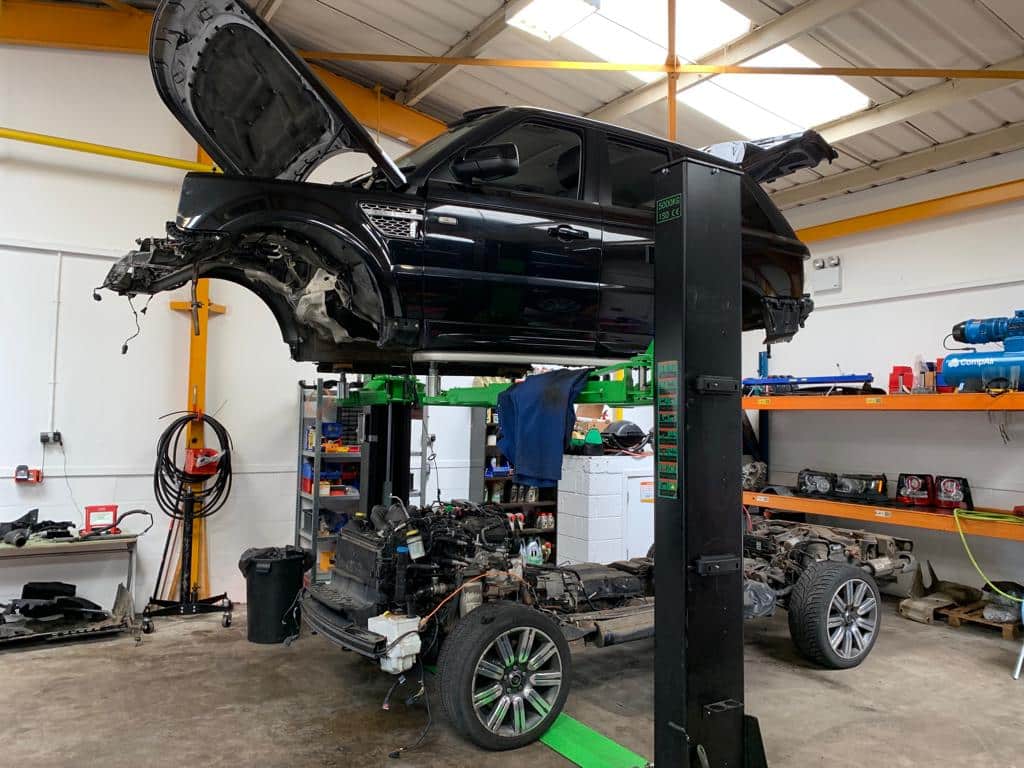
Permanent AWD Range Rovers and Sports commonly transfer imbalance through propshafts; vibration felt through the seat, or a steady buzz that does not change with steering inputs, points to a rear-drive component or propshaft imbalance.
Propshaft balancing or centre bearing replacement is more involved than a wheel rebalance and is more common on larger full-fat models; if vibration coincides with specific rev bands or speed bands, note that detail for the technician.
If vibration appears after a tyre change, get the wheel balance, hub clean and fastener torque checked within 50 miles.
Simple road-test checks you can do today
Drive at the speed where the vibration starts, normally around 50–55 mph, and note whether it changes with braking, cornering or when you lift off the throttle; steering-wheel-only vibration implicates front wheels, seat-only implicates rear or propshaft.
Do a visual check for missing wheel weights, rim buckles or tyre sidewall bubbles; if you suspect flat-spotting, drive steadily for 10–16 km to see if the thump fades before booking a workshop.
When to call a specialist and what to expect
If the shake persists after your basic checks, book a diagnostic road test and wheel-balance check; a proper diagnostic includes a road test at the onset speed, a four-poster lift check for steering and suspension play, and a static wheel-balance test.
Book a focused vibration diagnosis by visiting our Range Rover diagnostics page where we list the checks we perform; a workshop diagnosis prevents wasted spend and stops vibration accelerating wear on EAS height sensors and ADAS mounts.

Common causes, fixes and cost bands
| Cause | Typical fix | Typical cost band |
|---|---|---|
| Wheel out of balance | Rebalance and replace missing weights | Low |
| Flat-spotted tyre or internal damage | Warm out for 10–16 km or replace tyre | Low to moderate |
| Buckled rim | Repair rim or fit new wheel | Moderate |
| Warped brake rotors | Resurface or replace rotors | Moderate |
| Propshaft imbalance | Rebalance or replace shaft/centre bearing | Moderate to higher |
Frequently Asked Questions
What causes vibration at speed on a Range Rover?
How do I tell if it’s the tyres, the wheels, or something else?
How much does fixing each cause cost?
What are the most common causes of vibration after a tyre change?
Can I prevent vibration developing?
Final Thoughts
A judicious sequence of checks uncovers most Range Rover vibration at speed tyres problems: note the onset speed, look for missing wheel weights or rim damage, drive 10–16 km to rule out temporary flat-spotting, and call a specialist if the fault persists. Early diagnosis saves money and prevents secondary damage to suspension sensors and ADAS mounts.
Book a dedicated vibration diagnosis
Call 01786 625624 or visit our Range Rover diagnostics page to book a road-test and wheel-balance check. We are at Alva Industrial Estate, FK12 5DQ, about 30 minutes from Stirling; a focused diagnostic includes a road test, four-poster check and static wheel balance so you only pay for the real fault.
Sources
- Land Rover Arrowhead troubleshooting – Troubleshooting vibration and vehicle shaking guidance
- NHTSA technical service bulletin – Technical bulletin covering vibration and related faults
- Land Rover World forum discussion – Owner-reported vibration cases and diagnostic tips
- Full Fat Range Rover forum post – Discussion of vibration causes on Range Rover models