
Related on 4X4 Specialist
- All-Terrain Tyres on a Range Rover – What You Gain & What You Give Up
- Best Tyres for a Range Rover – Michelin vs Pirelli vs Continental Compared
- How Long Should Range Rover Tyres Last? – What’s Normal & What’s Not
→ Range Rover & Land Rover diagnostics · Browse our full Land Rover & Range Rover knowledge base

Range Rover Winter Tyres in Scotland: Do You Really Need Them?
You drive a Range Rover across damp Scottish mornings, climbing through frost-laced passes around the Ochils and down into gritted motorways. The key fact to start with, and one you can act on today: summer tyre rubber loses significant flexibility below 7°C, and winter tyres keep working where summers go numb. This short guide helps you decide between dedicated range rover winter tyres scotland, premium all-seasons, or sticking with summers year-round.
Short answer: When winter tyres make sense
Do you need range rover winter tyres scotland? Not always; a Range Rover’s AWD and traction aids will keep you moving on most salted A-roads if you run modern summer tyres and stay on gritted routes. Choose winters if ambient temperatures sit below 7°C for long periods, you use higher Stirlingshire routes, or you regularly leave the gritted network.
Winter tyres cut braking distance and improve starts in cold and snow, with approved winter rubber reducing stopping distance by up to 13 percent below 7°C, so for heavy models like the full-size Vogue and Sport the benefit is magnified because more mass needs more traction to stop safely.

What actually happens to summer tyres below 7°C
Summer compounds stiffen below about 7°C, reducing grip on cold, wet or frosty tarmac; that stiffness shows as longer braking distances on cold-but-dry roads and wheelspin pulling away in light frost. Expect noticeable difference once temperatures sit routinely between 0°C and 7°C.
If you want a number to watch, keep tread above 3mm through winter – the legal 1.6mm minimum is a safety limit, not a winter target; below 3mm snow handling and aquaplaning resistance fall off rapidly.


If local temps spend time under 7°C, you gain measurable stopping and starting advantage with winter tyres; check local weather patterns for October to March.
AWD helps, but it is not a substitute for winter rubber
Range Rover AWD systems are excellent at traction management; they help you start and hold traction on slippery surfaces, which is why owners of Evoque, Velar and Discovery sometimes manage winters on summer tyres. However AWD does not shorten braking distance; winter tyres do, and heavier models like the L405/Vogue and L494/Sport benefit most because their greater mass means longer stopping distances on identical rubber.
Practical note: if you regularly carry a heavy load or tow, winter tyres produce measurable stopping improvements of around 10 to 13 percent below 7°C, so that win is not marginal for loaded runs or higher-elevation B-roads.
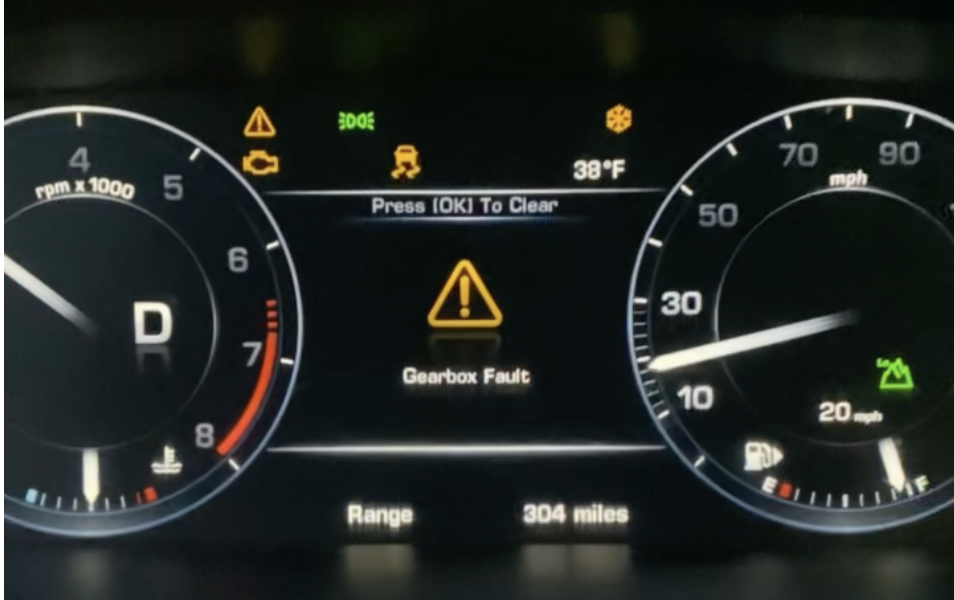

All-season tyres: the practical compromise
If you avoid remote ungritted routes and want no twice-yearly swap, premium all-season tyres such as models in the Michelin CrossClimate or Continental AllSeasonContact family perform well in Scottish winters while still behaving like a summer tyre above 7°C. They are the workshop recommendation for many urban and commuter Range Rover owners.
All-seasons remove the storage and swap cost and are a sensible single-set choice for Evoque, Discovery Sport or city-focused Sport/Velar owners who rarely climb higher roads; they will not match a dedicated winter tyre in deep snow or prolonged sub-zero conditions.


Keep winter tread above 3mm and check pressures monthly; a correctly inflated tyre performs far better than a new tyre at incorrect pressure.
Wheel and tyre matching, air suspension and ADAS
If you fit winter tyres on a second wheel set, match overall rolling diameter within 1 to 2 percent of the OE diameter to avoid throwing off electronic air suspension and ADAS calibration; this is common when owners swap from 21-inch summer wheels to 18-inch winter wheels.
After any change in rolling diameter or wheel diameter get a diagnostic check to confirm tyre-pressure sensors, EAS and speed-sensing systems read correctly; you can book our Range Rover diagnostics service at https://4×4-specialists.com/range-rover-diagnostics/ to verify sensors and calibrations before you head into untreated roads.
Quick check you can do
Measure overall tyre diameter with a tape or check tyre size marking – keep within 1–2% of OE, and confirm TPMS reset if you swap wheels. If you see ABS or air suspension warnings after a swap, stop and arrange diagnostics rather than driving on.

Signs your tyres are losing the cold-weather battle
Warning signs to watch for: wheelspin pulling away on frost, ESP/stability control intervening more often, longer braking on cold dry mornings, and nervous understeer when turning out of junctions. These are practical symptoms that summer rubber is out of its comfort range.
Simple checks: verify pressures monthly through winter, because tyre pressure falls roughly 1 psi for every 10°F drop; measure tread and replace tyres under 3mm for winter use; keep a set of winter wheels to avoid rapid wear to your summer alloys.
When to call us
If you notice repeated ESP intervention, ABS warnings, or a persistent handling change after a wheel swap, arrange diagnostic checks; unresolved sensor or rolling-diameter mismatches can mask as suspension faults and require a workshop scan.
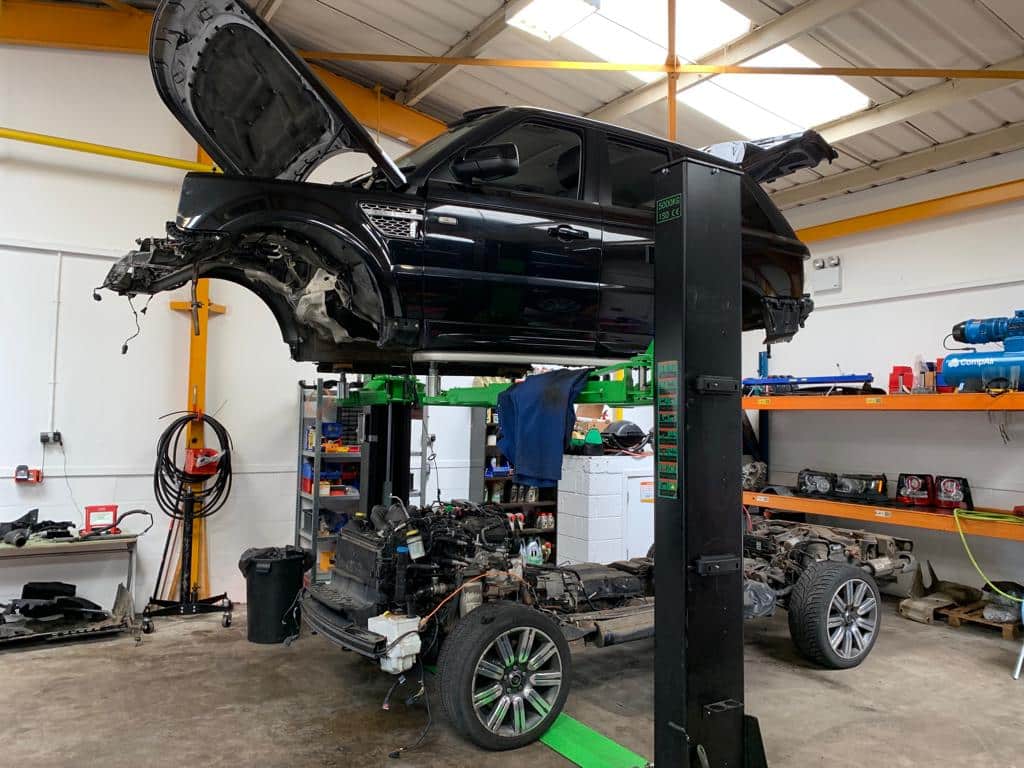
Keep winter wheel/tyre overall diameter within 1–2% of OE and get a diagnostic check after swap to avoid EAS or ADAS drift.
Seasonal swap logistics and common mistakes
Two practical routes: buy winter tyres on a second set of wheels and swap twice a year, or fit premium all-season tyres as a single-set solution. Dedicated winters preserve summer tyres and deliver peak winter performance; expect twice-yearly labour for mounting and balancing, and clean, dry storage for the unused wheel set.
Common mistakes to avoid: running summer tyres into deep winter, choosing cheap winter rubber with poor wear, not adjusting pressures for the cold, and using smaller diameter wheels without checking rolling radius; any of these can cause earlier wear or trigger EAS/ADAS issues that need calibration.
Summer vs All-Season vs Winter Tyres – Quick Comparison
| Characteristic | Summer Tyres | All-Season Tyres | Winter Tyres |
|---|---|---|---|
| Performance below 7°C | Drops sharply; compounds stiffen | Moderate; designed for cold damp roads | Strong; optimised for 0°C and below |
| Snow and frost | Poor; wheelspin likely | Acceptable for light snow | Best for snow, ice and frost |
| Swap frequency | None if replaced for all-year use | None; single set for year-round | Twice-yearly swap if on separate wheels |
| Impact on ADAS/EAS | Minimal if OE sizes retained | Minimal if size similar to OE | Requires matching rolling diameter within 1-2% |
Frequently Asked Questions
Do I actually need winter tyres on a Range Rover in Scotland?
How do I tell if my current tyres are coping with winter?
How much does a winter tyre setup cost versus a year-round option?
What are the most common winter-tyre mistakes Range Rover owners make?
Does changing between winter and summer tyres affect air suspension or ADAS?
Final Thoughts
For most Scottish Range Rover owners the decision comes down to where you drive and how much peace of mind you value. If your routine touches frost, rural B-roads or higher passes, winter tyres or a premium all-season will shorten braking, improve hill starts and reduce alarm events. If you stick to gritted routes and city commuting, all-seasons or modern summers can be perfectly acceptable.
Need hands-on advice or a diagnostic check?
Call 01786 625624 or visit us at Alva Industrial Estate, FK12 5DQ for tailored range rover winter tyres scotland advice and post-fit calibration; we cover tyre choice, wheel matching and diagnostic verification, roughly 30 minutes from Stirling.
Sources
- Land Rover Winter Wheels and Tyres – Official guidance on winter tyre benefits and approvals
- Land Rover USA Wheel and Tyres – Notes on tyre performance differences and stopping distances
- Pirelli Land Rover Winter Tyres – Manufacturer winter tyre options for Range Rover models