
Related on 4X4 Specialist
- Discovery Sport MHEV Fault – 48V Battery Issues & What It Costs to Fix
- MHEV 48V Battery Offline – Causes, Diagnosis & Repair
- Read: Charging System Fault on Range Rover MHEV – What Does It Mean?
→ Land Rover EV/PHEV/MHEV repair · Browse our full Land Rover & Range Rover knowledge base
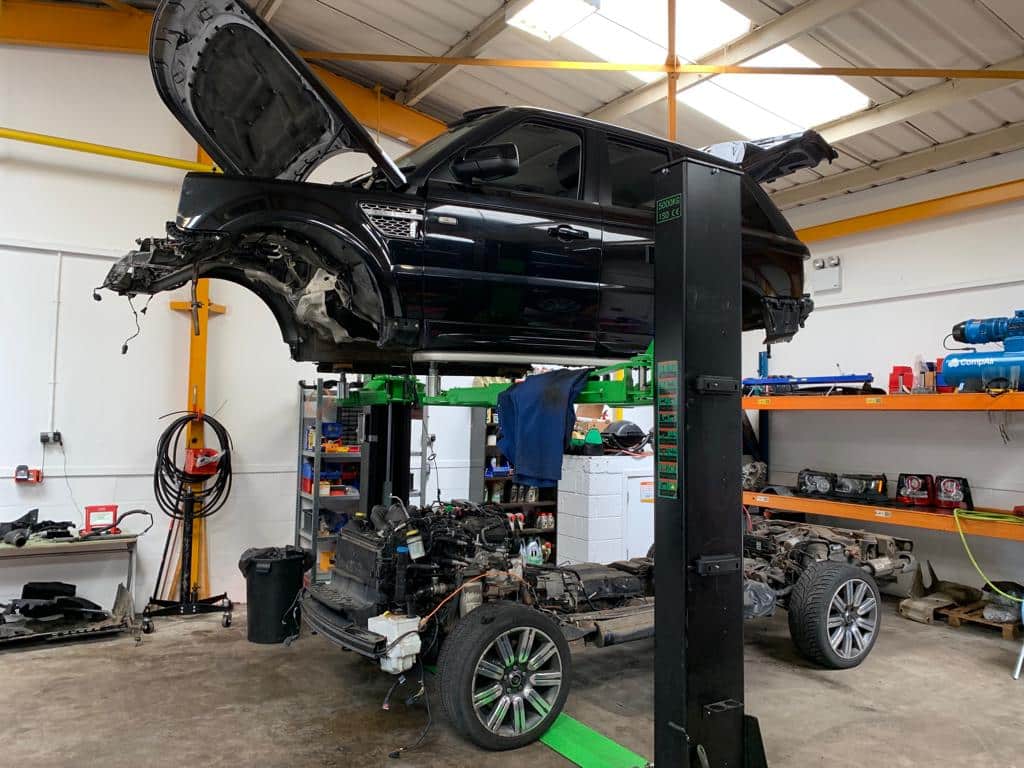
Why Your Range Rover Keeps Killing Its 12V Battery, MHEV Explained
You go out for a 10-minute run and come back to a flat 12V Range Rover battery again. If you own a post-2018 MHEV Range Rover, Sport, Velar, Defender or Discovery you are not alone. The 48V mild-hybrid architecture, belt-driven starter generator and DC-DC converter mean more modules stay awake at rest, so a weak AGM or lots of short trips quickly add up. Read on for a clear short answer, practical checks you can do, and what must be coded when you replace the battery.
Short answer: why your Range Rover 12V battery keeps going flat (MHEV)
Short answer first: MHEV Range Rovers pair a 48V system with the conventional 12V battery, so the BSG (belt-driven starter generator), DC-DC converter and telematics keep parts of the car partially powered while it sleeps. On L460, L461, L560, L663 and Discovery 5 cars that extra parasitic drain plus an ageing AGM will flatten the 12V faster than on older non-MHEV models.
Practical detail: original-fit AGM batteries commonly struggle beyond four years, short runs under 20 minutes prevent the alternator and BSG from fully topping the 12V, and a cumulative charge deficit leads to the familiar overnight flat battery.

How the MHEV electrical architecture stresses the 12V battery
MHEV systems use a 48V battery and BSG to capture energy and assist the engine; a DC-DC converter steps 48V down to 12V. That converter, the BSG and telematics often require a trickle of 12V power while the car sleeps, so unlike a non-MHEV Range Rover the car never truly goes cold. On L460 D300/D350 and P440e variants the management of these systems is particularly busy during sleep cycles.
The practical consequence is higher parasitic draw during rest and greater dependence on a healthy AGM 12V. If that AGM is past its useful life, the DC-DC will struggle to keep the 12V at the correct voltage and the car will register faults that look like module failures.


The 48V architecture plus DC-DC and BSG management increases parasitic drain; expect higher rest loads than on non-MHEV models.
Common parasitic drain sources specific to MHEV Range Rovers
Key culprits are the DC-DC converter, BSG management modules, telematics, security and infotainment modules that fail to enter sleep. On certain 2018–2021 cars the infotainment units are a known sleep-failure risk, keeping screens, processors and network modules powered and drawing current overnight.
Aftermarket devices are also a big factor: permanently wired trackers and dashcams increase parasitic draw significantly if tied into a permanent live circuit. Combine that with short journeys under 20 minutes and an ageing AGM and you have a recipe for a 12V that keeps going flat.
Owner checks you can do
Visually inspect for aftermarket wiring in the footwell, behind the dash and at the fusebox on L460/L461; look for taped splices or non-factory cable ties. If you have a dashcam or tracker, unplug it overnight and see if the battery still falls away after two nights.
If the car sits for long periods, avoid leaving ignition on with the engine off. That alone can run multiple body modules and accelerate drain on an already weak AGM.


Symptoms and the misleading fault codes you’ll see first
Early signs are subtle: stop-start disables, HVAC presets resetting, and intermittent ’12V Battery Low – Charge Required’ along with instrument-cluster warnings. If you push on, the car will refuse to start. Low 12V also causes modules to report faults on the DC-DC converter, BSG and EPB (electronic parking brake) that mimic expensive failures.
Practical tip: when you see DC-DC or BSG fault messages on an L460 or L561 Range Rover, check 12V voltage and battery health before ordering expensive modules. In many cases the fault vanishes after a proper AGM replacement and BMS registration.
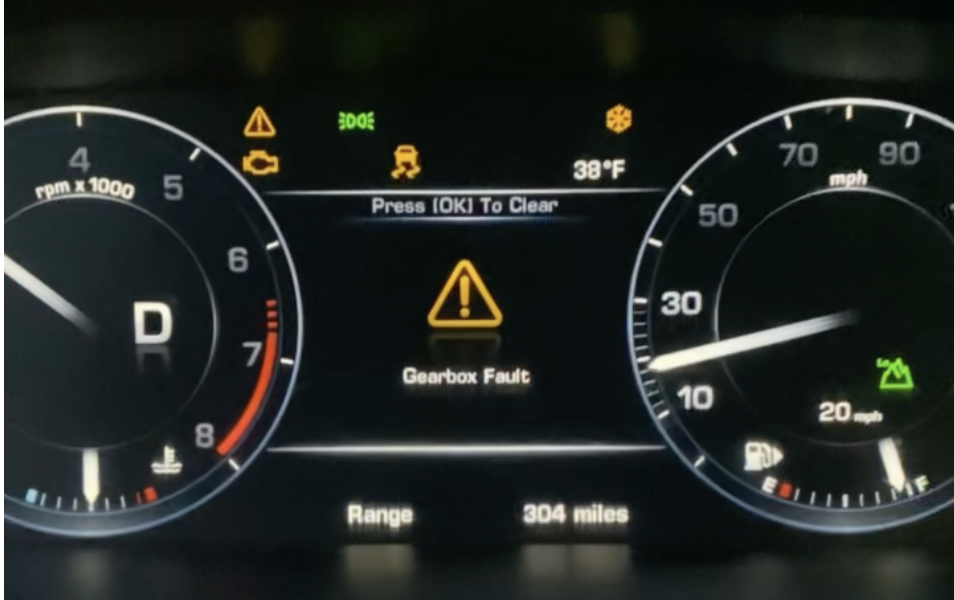
Low 12V voltage causes misleading DC-DC, BSG and EPB fault codes. Confirm battery health before replacing modules.
Diagnostics you can do, and what your garage will check
Do this at home first: check static 12V battery voltage with a handheld voltmeter; if the resting voltage is consistently well below a healthy reading across a few days, the AGM is likely weak. Unplug aftermarket accessories and perform a sleep test. Drive the car for a sustained 30+ minute run at steady speed to see if the BSG/alternator tops the battery.
A specialist will load-test the AGM, run a charging-system analysis on L460/L461 or L663 hardware, measure parasitic draw, and verify BMS coding. They will also check infotainment sleep behaviour on 2018–2021 units and inspect for aftermarket permanent lives before replacing parts.
When a code means ‘battery’ not ‘module’
Low 12V voltage produces spurious errors from the DC-DC, BSG and EPB modules. If a diagnostic session shows low system voltage across multiple modules, replace and register the AGM first; re-run diagnostics afterwards. This avoids pricey module replacements and repeated visits.

Battery replacement and non-negotiable BMS coding
If the AGM is past its service life, replace it with an OE-spec AGM and register it to the Battery Management System. Fitting an AGM without BMS coding on L460, L461, L560, L663 or Discovery 5 prevents correct alternator/BSG charging profiles and dramatically shortens the new battery’s life.
Practical help: when you book a swap, insist the garage performs the BMS registration session. We describe our Range Rover battery replacement service at this URL: https://4×4-specialists.com/range-rover-battery-replacement/. For pricing on a specific model call your local specialist; coding and correct fitment are worth the modest extra cost.
Parts and fitment detail
Use manufacturer-spec AGM batteries matched to the model: e.g. the AGM type fitted to an L460 D300/D350 differs from the battery used in a Velar L560. A correct fit includes terminal clamps, securing bracket torque to the manufacturer’s spec and a documented BMS coding record on the invoice.
Fit an OE-spec AGM and register it to the BMS on L460, L461, L560, L663 and Discovery 5 to ensure correct charging and longevity.
Practical prevention: keep your MHEV 12V healthy
If you use your Range Rover mainly for short runs, fit a smart maintenance charger such as a CTEK unit and use it weekly; this helps maintain an AGM on L460, L461 and Defender L663 cars. Do a 30+ minute drive at sustained road speed once a fortnight to let the BSG and alternator fully recharge the 12V.
Replace original-fit AGM proactively at around four years rather than waiting for failure. Also have any aftermarket trackers or dashcams checked and relocated to switched live circuits to avoid a permanent parasitic drain.

When to call a specialist, and what to expect
Call a specialist when you see repeated ’12V Battery Low’ messages, stop-start disabled warnings, or multiple module fault codes that appear after a low-voltage event. Expect a full battery and charging-system test, parasitic-draw check, infotainment sleep diagnosis for 2018–2021 units, and BMS coding if a battery is replaced.
A qualified workshop will document the new part number, the BMS coding session and provide a clear invoice so future warranty issues are supported. If you want hands-on help, schedule a battery and charging-system test rather than swapping parts blind.
Common MHEV 12V drain causes and owner actions
| Cause | Typical symptom | Owner action |
|---|---|---|
| Ageing AGM (original fit) | Intermittent ’12V Battery Low’, stop-start disabled | Replace AGM at ~4 years and register to BMS |
| Short journeys <20 minutes | Gradual loss of state-of-charge over days | Weekly smart charging and fortnight 30+ minute drive |
| Infotainment sleep failure (2018–2021 units) | Continuous drain overnight | Diagnostic sleep test; update or replace module if required |
| Aftermarket permanent-live devices | Flat overnight or increased parasitic draw | Relocate to switched live or fit isolation fuse |
Frequently Asked Questions
Why does my Range Rover MHEV keep killing its 12V battery?
Is it safe to keep driving an MHEV with a weak 12V battery?
How much does a Range Rover MHEV battery replacement cost?
What are the most common causes of MHEV 12V drain?
How can I prevent my MHEV battery dying?
Final Thoughts
A 12V that keeps going flat on an MHEV Range Rover is usually a symptom, not the whole story. Check battery health, rule out aftermarket permanent lives, and insist on OE-spec AGM replacement with BMS coding when necessary. Small habits like weekly smart charging and fortnightly 30+ minute drives make a big difference to reliability.
Book a battery and charging-system test
If your Range Rover keeps flattening the 12V, book a free battery and charging-system test. We stock correct AGM batteries for all MHEV models and perform the essential BMS coding so you do not return with the same fault.
Sources
- YouTube discussion on Range Rover battery drain – Video walkthrough of MHEV battery drain scenarios
- Advice on Range Rover battery drain – Technical commentary on parasitic draws
- Battery health guide – Practical tips on battery testing and symptoms
- Forum reports from owners – Owner experiences with MHEV battery issues