
Related on 4X4 Specialist
- Discovery 5 Air Suspension Faults – Common Issues & Repair Costs
- Do Larger Wheels Actually Damage a Range Rover’s Air Suspension?
- Read: Range Rover Air Suspension Compressor Failure – Signs, Causes & Fixes
→ Range Rover air suspension repairs · Browse our full Land Rover & Range Rover knowledge base

Off-Road Tyre Damage: What It Does to Air Suspension & ADAS
You love taking your Range Rover or Defender into rough country, but off road tyre damage can cascade into air suspension faults and ADAS headaches. A single sidewall cut or lodged rock may look minor yet cause an EAS fault, a popped air spring on one corner, or a misaligned front camera. Read this short, practical briefing so you can spot problems fast and avoid expensive repairs on models from Defender 90/110 to Range Rover L322 and L405.
How off road tyre damage links to air suspension failures
Short answer: tyre sidewall cuts and repeated bead impacts increase sidewall flex which transmits shock into air springs and height-sensor mounts, especially on cars fitted with Electronic Air Suspension like Discovery 4 and Range Rover Sport.
Detail and checks: look for tyre bulges, cords showing through the sidewall and sudden pressure loss; these are common on 18-22 inch wheels used on L405 and Defender wheels. If one air spring on a corner loses pressure the EAS system often flags a fault and the ride will lean noticeably to that side.
Practical check you can do right after a run
With the vehicle on level ground, measure ride height visually at wheel arch to see if one corner is low; inspect tyre sidewalls for cuts or bulges and use a handheld tyre gauge to record pressures in psi. Note model-specific wheel offsets on Defender 110 with 18 inch wheels, they increase sidewall strain when aired down.

Why height sensors and wiring get hurt off-road
Short answer: height sensors are mounted low, often on the lower control arm or chassis near the wheel arch on L322, L405, and Defender models, so rocks and branches frequently strike the sensor or its wiring loom.
Detailed fault mechanism: impacts bend sensor linkages, mud compresses connections and water ingress corrodes pins in the sensor plug; the result is EAS fault codes, disabled auto-levelling and intermittent height-readings. Check the wiring routing at the wheel arch junction and look for chafing where the loom meets suspension components.
Quick inspection steps
Unclip the lower control arm cover and inspect the sensor body and wiring for cracked housings or green corrosion on connectors. Tighten loose clips and replace perished grommets; replacement height sensors and genuine plug sets are typical repair items on Defender and Range Rover models.

A five-minute post-trip check of tyre sidewalls, ride height and ADAS optics prevents many failures on Defender and Range Rover models.
Air spring bellows: tear, slow leak, and failure modes
Short answer: extreme articulation and repeated hard impacts tear rubber bellows on air springs; Discovery 4 and Range Rover owners commonly see a single failed corner drop on rebound.
Symptoms and what to check: listen for hissing at the wheel arch, look for uneven ride height, and inspect bellows for cuts or delamination. If a bellows is popped you will notice the body approaching bump stops and a harsh ride; replacement bellows and seals are a common repair item and should be fitted with new plastic valve connectors to avoid future leaks.
When to replace rather than patch
Small punctures can sometimes be temporarily sealed, but once the rubber shows vertical cracks or the internal sleeve is exposed, fit a new air spring. On many Range Rover models a full corner air spring exchange takes 1.5–3 hours labour and is best done with the EAS system depressurised and diagnostic cleared.


ADAS sensors: mud, misalignment and water damage
Short answer: mud on a forward camera or radar reduces detection range and often triggers ADAS warnings on the dash; impacts to bumper mounts can misalign cameras without showing visible body damage.
Details and owner checks: wipe forward-facing camera lenses, radar covers and windscreen mounts after a muddy trail. A forward camera on a Range Rover Vogue or Sport needs clear optical alignment within a few millimetres; if you still see lane-keep or AEB faults get a diagnostic scan and calibration in a workshop equipped to handle ADAS recalibration.
Water crossings and connector corrosion
If you have crossed water near or above the vehicle wading depth, inspect ADAS module connectors for brown or green corrosion on pins; intermittent faults after a ford often point to moisture in the connector and can lead to permanent module failure if ignored.

Re-route or shield air-lines and wiring looms at wheel arches and fit skid plates to reduce impact damage to valve blocks and radars.
Underbody air-lines and wiring: common cut and crush paths
Short answer: air-line routes and wiring looms run low across wheel arches and belly pans, where branches and rocks can cut, crush or abrade them on Defender and Discovery tracks.
Inspection and fixes: check air-line unions at the wheel arch and along the subframe for splits and mud ingress; replace damaged quick-fit unions and protect exposed runs with split-loom tubing. A cracked air-line near the valve block will produce a hissing leak and often a single-corner drop on models with EAS.
DIY protection tips
Fit extra split-loom and secure loose runs with stainless P-clips to the chassis; on long off-road trips, check air-lines every 50–100 miles of hard terrain, and carry a roll of self-amalgamating tape for temporary repairs.


Post-trip checklist: quick tests that catch most problems
Short answer: do these five checks after every serious off-road day: visual ride-height balance, tyre sidewall inspection, clean ADAS optics, inspect height-sensor mounts and wiring, and listen for new air leaks in the wheel arches.
Step-by-step checks: measure tyre pressure in psi, note any corner that is visually lower by about 10–20 mm, wipe camera lenses with warm water, inspect sensor connectors for mud and green corrosion, and scan with a basic OBD2 reader for EAS or ADAS related fault codes before returning to tarmac.
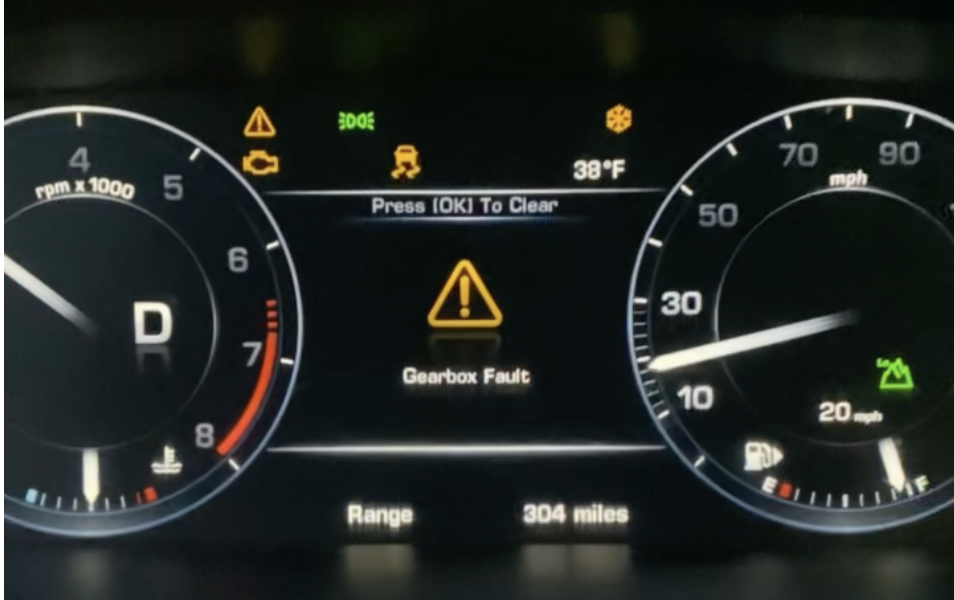
When the dashboard lights up
If you get an EAS warning or ADAS fault after a run, park on level ground, switch ignition off and on, re-check ride height and tyre pressures; persistent faults need a workshop scan to trace a damaged height sensor, corroded connector or a failed air spring.
Mud on cameras or radars often causes false ADAS faults; cleaning and a diagnostic scan restore functionality in most cases.
Repairs, typical parts and what to expect on cost
Short answer: common repairs after off-road tyre damage are tyre replacement, height-sensor swap, air spring replacement and ADAS recalibration; parts range from lower-cost wiring repairs to higher-cost air spring or camera module replacements on Range Rover models.
Workshop realities: tyre replacement for a 275/45 R21 tyre used on Range Rover Sport is an immediate safety item; a height sensor swap is often a single-sensor job with 0.5–1.5 hours labour, while a corner air spring replacement generally takes 1.5–3 hours and ADAS recalibration is a dedicated workshop job that requires diagnostic equipment and target plates.
When to call a specialist
Call a workshop if you see ride-height asymmetry, persistent EAS warnings, ADAS faults after cleaning, or if the underbody wiring shows corrosion. A post-trip professional inspection prevents small issues from becoming crash-level ADAS failures on road; specialists can pressure-test the system and do a proper ADAS calibration.
Preventive setup and off-road habits that save repairs
Short answer: use the vehicle’s EAS off-road mode to raise ride height, walk unknown tracks, and stay within the vehicle wading depth for models like the Defender 110 and Range Rover Sport.
Practical kit and habits: fit skid plates under differential and air-line runs, carry a compressor and tyre gauge to adjust pressures on the trail, clean ADAS optics after each run and book an annual EAS/ADAS health check if you regularly green-lane. Protecting sensor connectors with dielectric grease after cleaning helps delay corrosion on pin contacts.
Upgrades for serious off-road use
Consider heavy-duty air-line routing clips, stainless steel P-clips, and reinforced split-loom on Defender and Discovery models. Owners who routinely tackle rocky trails often fit aftermarket skid plates to deflect impacts away from valve blocks and ADAS radars.
Common off-road damage, symptom and first action
| Damage | Typical symptom | First owner action |
|---|---|---|
| Tyre sidewall cut | Rapid pressure loss or bulge | Replace tyre; check for rim and wheel damage |
| Air spring tear | One corner rides low; harsh ride | Park level, inspect bellows, book air spring replacement |
| Height sensor hit | EAS fault code; incorrect ride height | Inspect sensor linkage and wiring; secure/replace as needed |
| ADAS mud caking | Lane keep/AEB warnings | Clean optics and perform diagnostic scan |
| Underbody wiring chafe | Intermittent electrical faults | Inspect loom, apply split-loom and secure with P-clips |
Frequently Asked Questions
What does off-road use actually do to a Range Rover or Defender’s air suspension and ADAS?
What are the warning signs of off-road damage I should check for?
How much does off-road damage repair typically cost?
Can I prevent off-road damage to suspension and sensors?
Does mud and impact specifically affect ADAS calibration?
Where do I book an off-road damage check at 4X4 Specialist?
Final Thoughts
Off road tyre damage is rarely just a tyre problem. A small cut, a lodged rock or a muddy camera lens can quickly lead to an EAS fault, a popped air spring or an ADAS system that fails when you most need it. Make the five-minute post-trip inspection routine, protect low-mounted lines and sensors, and tackle faults early to keep your Defender or Range Rover performing on and off the trail.
Book a post-trip EAS & ADAS check
If you regularly green-lane or tackle rivers and rocky tracks, a professional inspection saves money and keeps safety systems reliable. Call 01786 625624 to arrange a post-trip check at our Alva workshop, or drop by to discuss protective upgrades and calibration work.
Sources
- Monroe Shocks & Struts – Technical reference on air suspension operation and failure modes.