
Related on 4X4 Specialist
- DPF & EGR Faults on Land Rover – Why They’re Often Linked to the Same Root Cause
- DPF Cleaning vs Replacement on a Range Rover – Which Is Worth It?
- Read: Range Rover DPF Warning Light – Amber vs Red & What Each Means
→ Range Rover Euro 5/6 emissions repair · Browse our full Land Rover & Range Rover knowledge base
Why Your Land Rover DPF Keeps Blocking on Short Trips: City Driving Explained
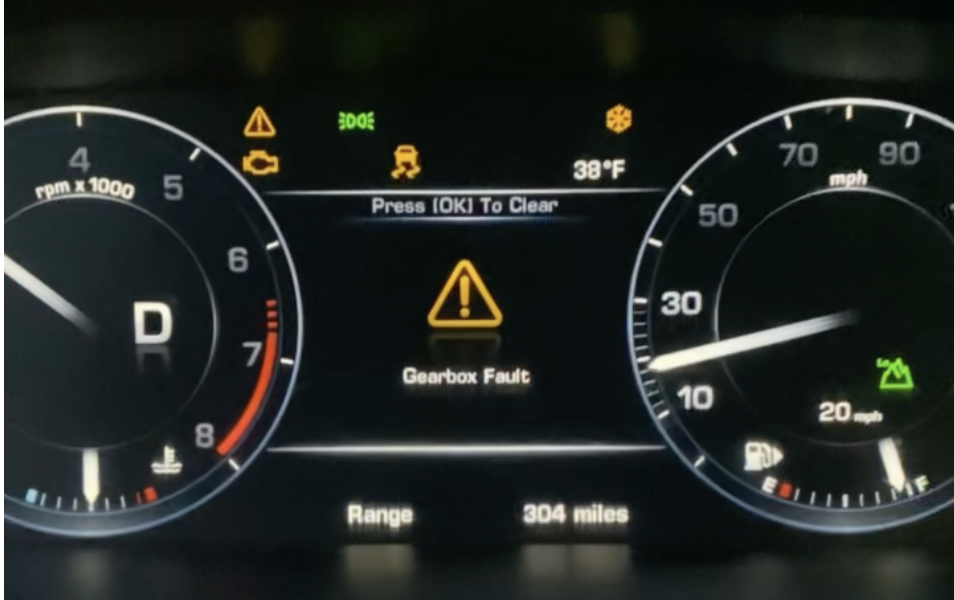
You pull into work, shut the engine off and the DPF warning light is back on. If you use a Discovery Sport, Evoque or a Range Rover for short urban hops, your vehicle’s exhaust never reaches the temperatures needed to burn soot out of the filter. This article explains in plain language why a land rover dpf keeps blocking short trips, what to check yourself, and the simple driving routine that prevents repeat blockages.
Short answer: why a Land Rover DPF keeps blocking on short trips
Short answer first: the DPF needs roughly 600°C in the exhaust to burn accumulated soot. Range Rover diesels usually reach that only during sustained runs above 40-50 mph for 20-45 minutes; city driving under 40 mph prevents passive regen and leaves the filter loading with each journey. Models commonly affected include Discovery Sport, Evoque (L538/L551) and Defender Puma (L663).
Active regeneration injects extra fuel to raise temperatures, but if you stop the engine mid-regeneration the process aborts and partially-burned soot turns into faster blockage. If you never run a 30-minute 50+ mph session fortnightly, expect re-blocking within 6-12 months on many high-mileage short-trip cars.

How DPF regeneration actually works
There are two regeneration modes: passive and active. Passive regen happens automatically at high exhaust temperatures during motorway runs; expect 600°C and steady 40-50+ mph for 20-45 minutes on JLR diesels. Active regen is ECU-controlled, injects extra fuel into the cylinders to raise exhaust temperature, and typically takes 15-30 minutes to finish if uninterrupted.
If the ECU detects high soot levels but temperature sensors or the differential pressure sender read incorrectly, it will fail to start or complete regen. Models to note: Range Rover L322/L405, Range Rover Sport L320/L494 and Discovery 4 all rely on accurate inlet/outlet temperature senders for ECU-triggered regens.


Drive at 50+ mph for 30 minutes every two weeks to allow passive regen and avoid repeat blocking.
Why city driving and short trips are the primary cause
Urban use rarely gets exhausts hot enough to passively burn soot. If your typical trip is under 20 minutes at under 40 mph, the ECU never achieves or completes the 600°C target. Vehicles like Discovery Sport and Evoque that live in town are the most frequently booked for repeated DPF cleans.
Drivers often interrupt active regen by switching off the engine when they arrive. Signs of active regen include a slightly higher idle, a faint hot smell, and the cooling fan running after shutdown. If you habitually switch off, the partial regen residue builds up faster than it can be cleared.

Upstream faults that make blocking much worse
A blocked DPF can be a symptom, not the root cause. Common culprits include a faulty EGR valve dumping excess soot, turbo oil seal leaks letting engine oil into the exhaust, or stuck injectors running rich and producing heavy soot. Any of these will accelerate soot and ash loading on filters in Evoque L538/L551, Defender L663 and Discovery models.
Ash from oil and engine additives cannot be burned off; repeated oil ingestion from turbo seal failure or using non-low-SAPS oil turns into permanent ash that requires chemical or oven cleaning. Check service receipts for low-SAPS oil like JLR-specified 5W-30 when diagnosing rapid re-blocking.

Keep fuel above a quarter tank and insist on low-SAPS 5W-30 oil at every service to reduce ash formation.
Owner checks and quick fixes you can do today
Check fuel level first: many Land Rover ECUs will defer regeneration if the tank is below a quarter full. Next, confirm you are using the correct oil, low-SAPS 5W-30, at each service; wrong oil increases ash. These two checks often make an immediate difference for Discovery 3/4/5 owners.
Use a Bluetooth OBD adapter and a regen-monitoring app to spot active regen in progress on models like Range Rover Sport L494. If you see higher idle, fan running or rising exhaust temps but still get frequent warnings, book a pressure-differential and temp-sender test to check sensors before cleaning the filter.
Quick visual checks
Look for blue smoke from the tailpipe on start-up; that points to oil ingestion from turbo seals. Check for oil leaks around the turbocharger and intercooler pipes on 2.2 and 2.0 diesels. If you see oil on the downpipe or smell sweet burning, arrange a turbo inspection.


Forced regen, cleaning or replacement: which one and why
If the filter is mostly soot and sensors read correctly, a forced regen or a professional chemical clean will often restore capacity. Soot is reversible; ash is not. Vehicles with years of short-trip duty frequently have ash-loaded cores that need oven cleaning or replacement.
Before any work we perform a differential-pressure and ash-loading assessment to prove whether cleaning will help. For many Range Rover L322/L405 owners the difference between a chemical clean and an oven strip is obvious on test data, and the right choice avoids unnecessary replacement.

Address EGR faults, turbo oil leaks and injector issues early; these are common causes of rapid re-blocking.
Preventive routine for urban owners
Make a fortnightly habit of a sustained 50+ mph run for 30 minutes. Choose a safe route and make it non-negotiable; this is the single best prevention for a land rover dpf keeps blocking short trips scenario. It applies to Evoque, Discovery Sport and Defender users alike.
Recognise regen signs and never stop the engine mid-regeneration. Use the correct low-SAPS oil specification at every service, and have EGR and turbo seals inspected at 60k and 100k mile service intervals on older models to prevent oil and soot ingress into the DPF.


When to call a specialist
Call a specialist if you have repeat DPF warnings, persistent loss of power, black smoke or a stuck regeneration cycle. These symptoms on Range Rover Sport L494 or Discovery 4 usually point to an upstream fault such as EGR, turbo seal or injector problems that force the DPF to block repeatedly.
If your DPF light returns within a few months of cleaning, arrange a differential-pressure test and ash-loading report before any replacement is recommended. Early specialist diagnosis prevents unnecessary DPF replacement and targets turbo, EGR or injector repairs first.
DPF recovery options
| Option | What it fixes | Notes |
|---|---|---|
| Forced regen | Burns soot without removing filter | Useful if sensors and turbo are healthy; monitor with OBD |
| Chemical clean | Removes heavy soot and some ash | Good for moderately loaded filters; requires pressure/ash validation first |
| Oven strip & replace core | Removes stubborn ash and restores flow | Needed for long-term short-trip use where ash has accumulated |
Frequently Asked Questions
Why does my Land Rover DPF keep blocking even after a clean?
Is it safe to use a Land Rover diesel mainly for short city trips?
How much does it cost to fix a chronically-blocking DPF?
What are the most common causes of repeat DPF blocking?
How can I stop my DPF blocking again?
Do you cover DPF cleaning on Sport, Vogue, Velar, Evoque, Defender and Discovery?
Will an independent specialist void my warranty by carrying out DPF cleaning?
Where do I book a DPF clean at 4X4 Specialist?
Final Thoughts
If your land rover dpf keeps blocking short trips are almost always the reason. Start with the simple steps: keep fuel above a quarter tank, insist on low-SAPS 5W-30 oil, and schedule a 30-minute 50+ mph run every two weeks. If the light returns quickly after a clean, book a specialist diagnosis to find an EGR, turbo or injector fault before you replace the filter.
Book a DPF check and clean
If you’re fed up with a recurring DPF warning, call 01786 625624 to book a diagnostic. Early intervention and a correct root-cause repair often prevent unnecessary replacement.
Sources
- Bumper – Blocked DPF symptoms – Overview of DPF symptoms and regeneration basics.
- LR UK Forums – Discovery Sport DPF reports – Owner reports of repeated DPF warnings and sensor issues.
- FullFatRR forum – Community discussions on DPF behaviour in urban use.