
Related on 4X4 Specialist
- How Often Should You Change the Oil on a Land Rover Ingenium Engine?
- Land Rover Defender Ingenium Engine Problems – Timing Chain & Oil Dilution Explained
- Read: Discovery 5 Ingenium Diesel Timing Chain – Are the Updated Engines Better?
→ Ingenium engine specialist diagnosis · Browse our full Land Rover & Range Rover knowledge base

Ingenium Engine Oil Dilution: The Hidden Problem That Destroys Land Rover Diesels
You check the dipstick and the oil level has gone up, not down. The oil smells of diesel and the service light has popped up early. That is ingenium engine oil dilution starting to eat your turbo, timing chain and cylinder rings. Read this short, practical guide and learn how to check, stop and prevent the problem before repairs hit four figures.
Quick answer: what is ingenium engine oil dilution and why you should care
Short answer: fuel from aborted DPF regenerations seeps past the piston rings into the sump, thinning the oil and raising the level on the dipstick. On 2.0 Ingenium diesels (D150, D165, D180, D200, D240, D250, D300, D350) this is a routine failure mode when regens keep being aborted on short trips.
Why it matters: diluted oil drops viscosity, so turbo bearings, cam lobes, piston crowns and the timing chain run with a thinner oil film. A single ignored dilution episode can be a few hundred pounds to fix; left long enough, turbo and upper-end repairs run into thousands.

How dilution happens during DPF regeneration
The ECU uses late post-injection pulses to raise exhaust temperature and burn soot from the DPF. If the exhaust never reaches regeneration temperature, that injected fuel does not combust and some runs back past the rings into the sump. Repeated aborted regens create a steady build-up of diesel in the oil.
Practical detail: motorway drives of at least 30 minutes at 60+ mph allow a full regen. Cars used for sub-20-minute urban runs are most at risk; blocked or cracked DPFs, failed injectors and weak turbos increase the probability.

A quick cold dipstick check and smell test takes two minutes and catches dilution before damage starts.
Symptoms you can check in 10 minutes
Top three checks: (1) Dipstick or dashboard oil level rising between services instead of falling, (2) Strong diesel smell on the dipstick or oil filler cap, (3) Service light illuminating earlier than normal, sometimes at 6,000 to 7,000 miles rather than the expected 16,000+ miles. If you see any of these, suspect ingenium diesel oil dilution.
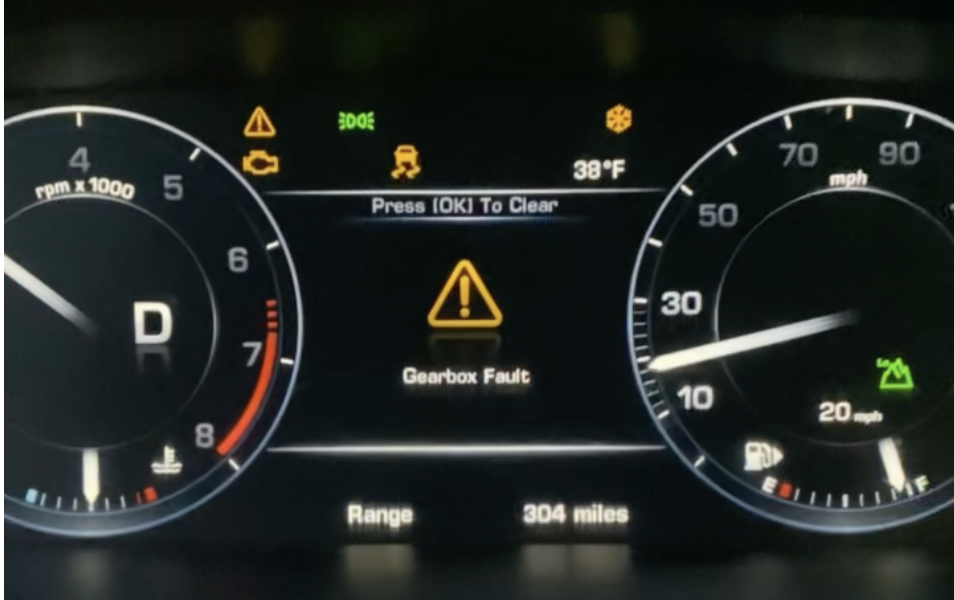
Hands-on test: with the engine cold, pull the dipstick, wipe and smell. If it smells of diesel and the level is above the max mark, do not drive the car. Engine oil diluted by around 6.1% should trigger a dashboard warning in some systems, so treat a rapid level rise as urgent.
Quick visual and smell test
Remove the dipstick with the engine cold, wipe and recheck. Diesel-tainted oil smells sharp and distinct. Note the exact reading; if it sits above max by more than a few millimetres after a cold start, book a service immediately.


Immediate steps and diagnostic workflow
Short answer first: if oil is above max or smells of diesel, stop driving. Change the oil and filter immediately and scan the ECU for regen history and recent fault codes, especially pending DPF regens or injector faults.
Detailed checks: record oil level and sample the oil for lab analysis if possible. Use a diagnostic tool to read the DPF regen log and post-injection events. Inspect the DPF backpressure, boost pressure and turbo health; failing turbos often shed metal particles which worsen wear when oil is already diluted.
DIY checks you can do before the garage
Check for soot streaks on the underbody around the DPF, smell the dipstick, note driving pattern history and keep a log of short trips under 20 minutes. A 30-minute motorway drive and a fresh oil change is a useful immediate remedy for mild dilution.

Sustained motorway runs allow full DPF regen; aim for at least one 30-minute run per week if you do mostly short trips.
What diluted oil does to Ingenium components
Thinner oil loses film strength and shear resistance. Turbo journal and thrust bearings run hot and wear quickly; camshafts and lifters suffer scuffing; piston rings lose sealing efficiency and the timing chain stretches due to poor lubrication. We see turbos and upper-end cam damage on cars with repeated dilution.
Cost guide: a single oil and filter service to clear early dilution is typically a few hundred pounds. Turbo or timing-chain repairs range from £1,200 to £4,000 depending on parts and labour. Early detection saves a complete engine rebuild bill that can exceed £8,000.

Prevention: habits, service intervals and correct oil
Simple routine: drive one 30-minute motorway run at least once a week to allow full DPF regen. For owners doing mostly short urban journeys, reduce oil service intervals to 9,000 miles or 12 months and record each regen event in your service notes.
Use only recommended oil grades, ACEA C2 or C5 equivalents, and OEM or OE-quality filters. A correct spec oil maintains anti-wear additives and shear stability; mismatched grades accelerate damage when fuel contamination happens.
When ECU recalibration helps
On heavily-affected cars, an ECU recalibration can alter the DPF regen strategy to reduce post-injection frequency. This is a specialist job that requires a garage experienced with Ingenium regen mapping and should be combined with a full oil change and DPF health check.

For short-journey use shorten oil change intervals to 9,000 miles or 12 months and use ACEA C2/C5 spec oil.
When to call a specialist and how we diagnose it
If you have a rising oil level, diesel smell on the dipstick or the service light is early, book a diagnostic without delay. A proper check includes oil analysis, ECU regen-history download, DPF backpressure, boost tests and turbo inspection; that full diagnostic typically takes 1.5 to 3 hours depending on vehicle and history.
If you need help, learn more about our Ingenium engine repair and rebuild service here: Ingenium engine repair and rebuild. We will advise whether a simple oil change will do, or whether turbo or upper-end work is needed.

Prevention vs Repair Cost Snapshot
| Action | Typical cost | Effect on risk |
|---|---|---|
| Weekly 30-minute motorway run | Free | Greatly reduces aborted regens |
| Oil & filter change (early detection) | £200-£400 | Resolves mild dilution |
| Turbo replacement | £1,200-£3,500 | Fixes damage caused by prolonged dilution |
| Upper-end engine repair or rebuild | £4,000+ | Needed if cam, pistons or chain are damaged |
Frequently Asked Questions
What is oil dilution on an Ingenium diesel engine?
How can I tell if my Ingenium has oil dilution?
Is it safe to drive with diluted oil?
How much will fixing oil dilution cost?
Where do I book an oil dilution check?
Final Thoughts
Ingenium engine oil dilution is avoidable if you act early. Check your dipstick and smell the oil, do one 30-minute motorway run a week, and shorten oil change intervals if you do lots of short trips. Small habits now save thousands later.
Book an Ingenium oil dilution check
Call 01786 625624 or visit our workshop at Alva Industrial Estate, FK12 5DQ to have your oil level and DPF regen history checked. We will tell you whether a simple oil change will protect your turbo and timing chain, or whether further work is needed.
Sources
- YouTube technical footage on Ingenium dilution – Demonstration of dilution symptoms and dashboard warnings
- LR Direct technical guide – Technical note on 2.0 Ingenium failure modes
- LRUK forum discussion – Owner reports and real-world examples of oil dilution