
Related on 4X4 Specialist
- New Land Rover Defender Common Problems – What to Watch Out For
- Land Rover Defender Ingenium Engine Problems – Timing Chain & Oil Dilution Explained
- Read: Discovery 5 Ingenium Diesel Timing Chain – Are the Updated Engines Better?
→ Land Rover Discovery servicing · Browse our full Land Rover & Range Rover knowledge base

Land Rover Defender 90 vs 110 vs 130 reliability: Which Has the Fewest Issues?
You are choosing between Defender 90, 110 and 130 and you want the straight answer on land rover defender 90 vs 110 vs 130 reliability. Short version: mechanically they are the same platform; the differences come from how you use them. The P400 petrol and D300 diesel mild-hybrid options share engines, transmissions and electronics, so expect identical Pivi Pro, 12V drain and MHEV warning patterns unless the car has 2022+ build improvements.
Short answer, quick pick
Short answer: there is no magic winner. The 110 is the safest workshop pick on reliability because it is the volume model; the 90 is lightest-duty in daily use; the 130 shows more wear because it carries heavier loads. All three use the P400/P300 petrol and D300 diesel MHEV architectures, so core fault patterns track across wheelbases.
If you want a single takeaway for land rover defender 90 vs 110 vs 130 reliability: buy the body length that matches the job. If you expect regular towing or heavy payloads choose the 110 or 130 but budget for accelerated brake, tyre and air-spring wear.

Shared architecture and common faults
Mechanically the three share Ingenium engines and ZF-based transmissions; that means Pivi Pro infotainment glitches, 12V battery drain and mild-hybrid MHEV warning lights appear on 90, 110 and 130 equally. Expect identical DPF and EGR behaviour on D300 diesels, so duty cycle matters more than wheelbase.
Early 2020 builds showed teething faults that were largely remedied by 2022+ production; if you are buying used, prioritise a car with a documented software history and OTA updates applied, especially for Pivi Pro and MHEV battery management.
What to watch for at the diagnostic bay
Scan for stored ECU faults relating to the MHEV stack and infotainment; note recurring warnings and date codes. Verify that the 12V battery health reads acceptable in the battery management module; low state-of-health often correlates with multiple accessory faults.


All three Defenders share engines, transmissions and electronics; choose 90, 110 or 130 based on payload and towing plans, not presumed mechanical superiority.
Defender 90: where it gains reliability
The 90 is the lightest kerb weight and typically has the gentlest wear profile: expect the slowest tyre degradation and lower brake rotor and pad wear compared to 110 and 130 when fitted with the same tyre size. Its shorter wheelbase delivers agility but a slightly firmer ride; owners often report fewer air-suspension complaints because the body is less frequently weight loaded.
If your usage pattern is weekend exploring or urban driving, choose the 90. Look for P400 petrol MHEV cars to avoid diesel DPF/EGR duty cycles; prefer 2022+ build dates where early production software issues have been addressed.
Practical checks for a used 90
Check tyre wear for even shoulder wear, inspect rear axle bushes for movement, and confirm air-suspension height holds when parked; lighter 90s should show minimal compressor run-time at idle.


Defender 110: the balanced choice
The 110 is the production volume leader, which means early production faults were exposed and often fixed faster; this typically results in a more mature platform in workshops. For reliability pick the 110 with a D300 diesel if you need range and torque, and confirm the car has 2022+ build updates applied.
The 110 is the sweet spot for mixed use: family duty, light towing and off-road. Tyre wear and brake life are moderate. If you plan to tow regularly, specify correct towing electrics and weight-rate the air suspension to the GVM settings in the load menu.
Shop-floor reality
Independent specialists see the 110 most often; that familiarity shortens diagnosis times for Pivi Pro and MHEV faults, and parts pipelines for suspension and brake components are healthiest for 110-bodied cars.
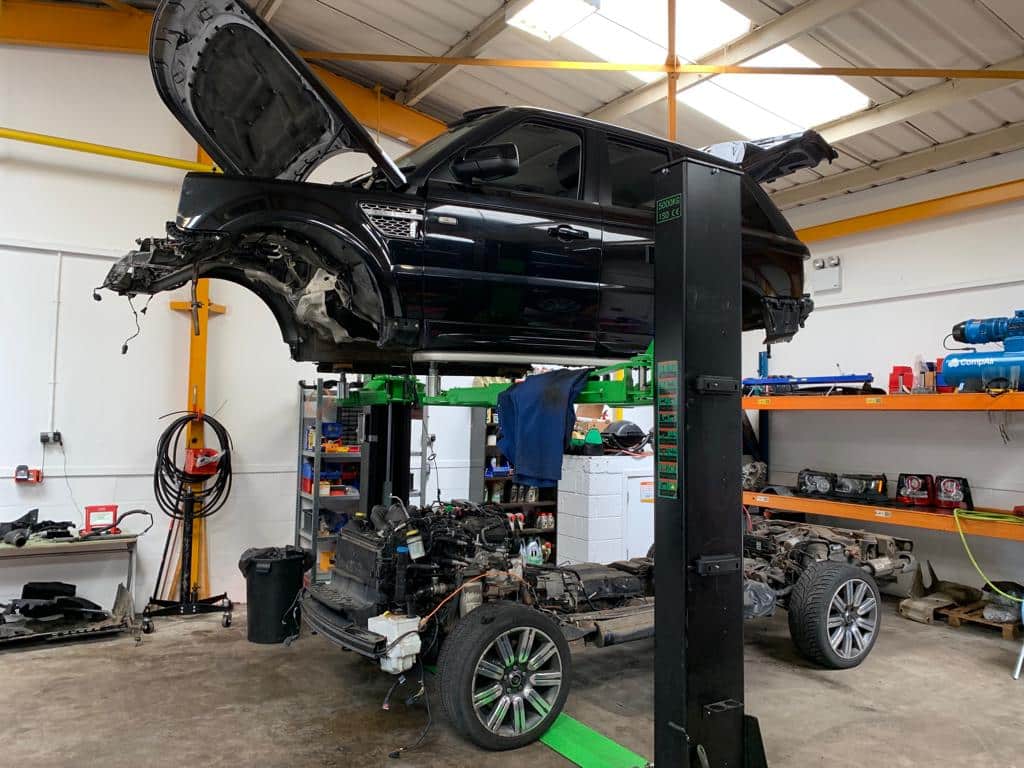

If you pick a 130, budget for more frequent air-suspension, brake and tyre maintenance when used for towing or heavy payloads.
Defender 130: built for work, needs heavier maintenance
The 130 has the highest kerb weight and is most often used for towing and heavy payloads, which accelerates wear on air suspension, brakes and drivetrain components. Expect faster tyre wear, more frequent air spring and compressor servicing, and increased brake rotor thickness loss when used to haul loads regularly.
If you choose a 130, plan annual air-suspension inspections and set aside a maintenance premium: heavier use means earlier replacement intervals for pads, discs and air-suspension components compared with the 90 and 110.
Checklist specific to 130s
Inspect air springs for bulges, listen for extended compressor cycles at cold starts, and check brake-pad remaining thickness on the front axle; expect service frequency to rise if the vehicle regularly tows above its recommended weight.
Servicing, fuel and running-cost realities
Service intervals and procedures are identical across 90, 110 and 130 when performed by an independent specialist; use low-SAPS oil meeting ACEA C2/C3 5W-30 and follow the manufacturer service schedule. Independent servicing will not void warranty if you document part numbers and procedures under UK Block Exemption rules.
Fuel economy differs by only about 1 to 2 mpg between wheelbases on the same engine in controlled conditions, but a heavily-loaded 130 will return noticeably worse real-world figures than a lightly-loaded 90. For diesels, ensure at least 50% of your annual mileage is sustained motorway running to avoid DPF regeneration issues and possible limp-mode events.
Budgeting and parts availability
Expect tyre replacement intervals shortest on 130s and longest on 90s; brake-pad wear follows the same pattern. Labour rates are similar across variants, but parts lead-times can be slightly longer for 130-specific body-panels and trim due to lower volumes.

Aim for a 2022 or later build with full software history; many early 2020 teething issues were resolved in later production runs.
Pre-purchase checklist and when to call a specialist
Before you buy, get a pre-purchase inspection focused on air-suspension health, brake-pad thickness, tyre wear pattern and stored ECU faults. Prefer 2022+ build dates where possible; check the service history for software OTA updates and documented MHEV battery checks.
Key shop checks: an air-spring leak or compressor running continuously, DPF regen history on D300 diesels, Pivi Pro software version and 12V battery state-of-health. If you find multiple MHEV or infotainment warnings, call a specialist for a full diagnostic and document all part numbers and oil grades on the invoice.
Book a pre-purchase or service
If you want an independent second opinion or pre-purchase inspection on any Defender 90, 110 or 130, book a specialist check that covers air suspension cycles, MHEV battery logs and DPF regeneration history; we run structured inspections for wheelbases and duty cycles.
Quick comparison: 90 vs 110 vs 130 (reliability-focused)
| Variant | Typical use-case | Most common wear points |
|---|---|---|
| Defender 90 | Weekend vehicle, urban and light off-road | Lightest tyre and brake wear; less frequent air-spring attention |
| Defender 110 | All-round family/work use, highest-volume production | Moderate tyre/brake wear; proven parts availability and earlier production fixes |
| Defender 130 | Towing, heavy payloads, commercial use | Accelerated air-suspension, brake and tyre wear when loaded |
Frequently Asked Questions
Are there real reliability differences between the 90, 110 and 130?
Is one variant safer to drive than another?
How do running costs compare?
Which Defender variant has the fewest workshop issues?
How can I avoid the worst issues on whichever I buy?
Final Thoughts
Pick the body length that matches your expected duty cycle. If you rarely tow and want agility, the 90 saves on wear. If you want a reliable all-rounder with the broadest workshop support, the 110 is sensible. If you need the load space and towing capability of a 130, plan for a modest uptick in suspension, brake and tyre maintenance.
Book a Defender pre-purchase inspection or service
Call 01786 625624 or visit https://4×4-specialists.com/independent-range-rover-service/ to arrange a specialist inspection. We are at Alva Industrial Estate, FK12 5DQ – about 30 minutes from Stirling. Pre-purchase checks on Defender 90, 110 and 130 available.
Sources
- Monarch Defender comparison – Background on Defender wheelbases and duties
- Land Rover Los Angeles Defender comparison – Manufacturer and dealer perspective on variants
- TX Garage overview – Editorial take on the 110 as the ‘sweet spot’
- YouTube Defender comparison – Video comparison illustrating body-length differences