
Related on 4X4 Specialist
- New Range Rover L460 – What Changed from the L405 & Is It More Reliable?
- Range Rover L460 MHEV vs PHEV – Which Should You Buy?
- Read: New Range Rover Sport L461 – What Are the Early Known Issues?
→ independent Range Rover specialist · Browse our full Land Rover & Range Rover knowledge base
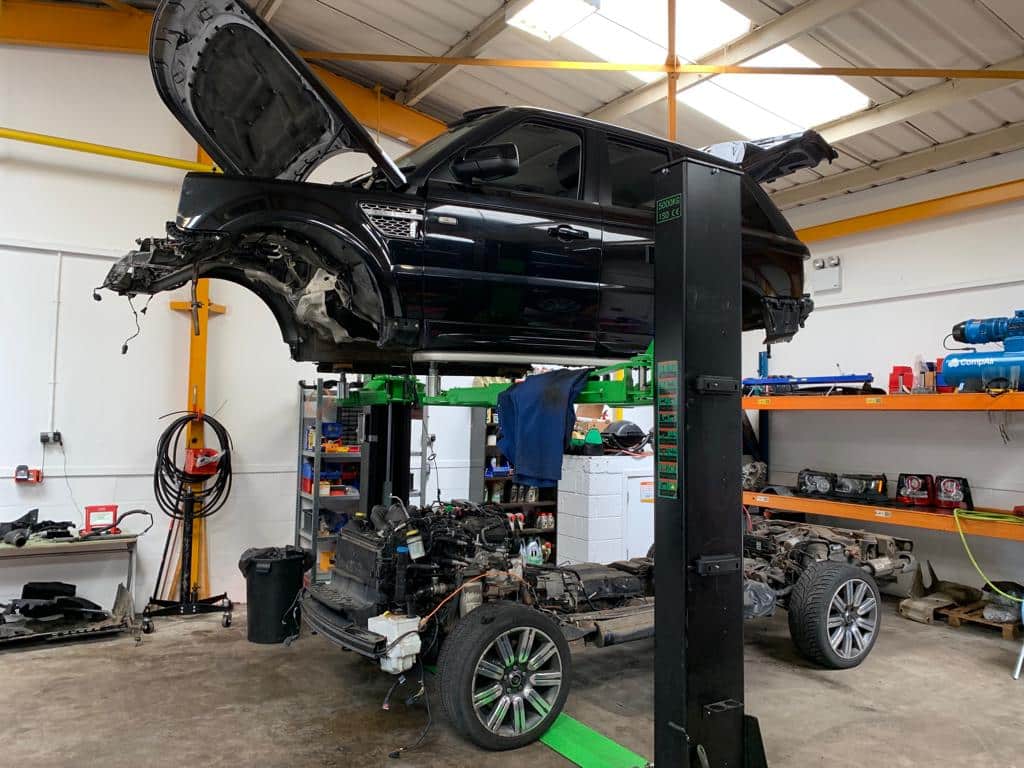
Range Rover L460 Common Problems: What Owners Are Seeing (2022–2025)
You love the look and presence of the L460, but early ownership has revealed a handful of recurring gremlins. From Pivi Pro freezes to 12V drain and air-suspension quirks, these are the real-world range rover l460 common problems owners are asking about. Read the punchy checks and practical fixes so you know what to try in your driveway and when to book a diagnostic.
1. Pivi Pro infotainment freezes and reboot loops
Short answer: frozen screens, long boot times and random reboots are the single most-reported electronic fault on the L460. Symptoms include a blackscreen at start, Bluetooth dropping, or the system cycling for several minutes. An OTA software reflash usually cures the issue; a dealer or independent specialist will typically run a 30–90 minute reflash session.
Practical checks: force-reboot the head unit by holding the power button for 10–15 seconds, test a second phone for Bluetooth to rule out handset issues, and verify the system shows the latest software build in Settings. If the unit still fails, expect diagnostic time of 0.5–1.5 hours and allow 1–2 hours for a full reflash; out-of-warranty workshop cost for diagnosis and labour is commonly in the £60–£250 band.
When to call the workshop
Call us when the unit repeatedly fails after a forced reboot, when navigation plots incorrect routes or when the screen remains black during driving. Persistent faults often need dealer-level or JLR-capable diagnostic tooling to apply queued OTA patches or perform a module reprogram, which typically takes 1–2 hours of workshop time.

2. 12V battery drain and parasitic draws
Short answer: cars left standing for 2+ weeks, especially PHEV variants, commonly suffer parasitic 12V drain that flattens the battery. Symptoms are slow cranking, warning lights on startup, or repeated key-fob pairing failures. A typical 12V AGM or lead-acid replacement takes 0.5–1 hour and costs around £140–£360 depending on battery spec.
Practical checks: check resting voltage with a multimeter; < 12.2V signals a weak battery. Disable aftermarket accessories, leave the car connected to mains if parked long-term, and exercise the vehicle weekly for 20–30 minutes. If parasitic draw persists, workshop diagnosis often takes 1–3 hours using an amp clamp or loadbox to trace circuits; expect a diagnostic fee of £60–£180.
Preventive tip
If you own a PHEV P440e or P510e, maintain high-voltage battery charge cycles and use manufacturer-tested chargers to reduce auxiliary system wake-ups. Weak 12V batteries are frequently the root cause of multiple module errors on the L460, leading to cascading faults.


Apply OTA updates as they arrive; many Pivi Pro and module issues are cured by reflashes that take under two hours.
3. Air suspension height sensors and compressor faults
Short answer: height sensor calibration can drift in extreme temperature swings and the air compressor may run continuously or fail to engage, producing uneven ride height or suspension warnings. Symptoms include one corner sitting low, the compressor running non-stop from the rear left of the vehicle, or intermittent DTCs related to the air ride module.
Practical checks and fixes: exercise the full ride-height range monthly, visually inspect for air leaks around the compressor and strut bellows, and check for corrosion on electrical connectors. Simple sensor or harness repairs are moderate in cost; full strut or compressor replacement is higher, often taking 3–6 hours and costing from several hundred to over £1,500 depending on whether you replace a single strut or the compressor assembly.
When to intervene
If the vehicle refuses to attain normal ride height, or the compressor runs constantly for more than 10 minutes, call a specialist. Early diagnosis with pressure and leak tests plus module interrogation usually takes 1–2 hours and prevents expensive strut replacement later.

4. Module communication failures and multiple warning lights
Short answer: temperature swings can cause module communication errors where multiple unrelated warning lights appear together. Symptoms include ABS, DSC, engine management and airbag lamps illuminated at once, or intermittent drivability faults.
Practical checks: note whether warnings appear at cold starts or after long motorway runs; perform a full fault read with J2534-capable tooling or equivalent to capture historical and live data. Diagnosis typically needs 1–2 hours and may reveal a single module failure or a harness/ground issue; repair times vary from 1 hour for a re-seating/cleaning job to 4+ hours if a module needs replacement and reprogramming.
Owner action
Document when lights appear, record any recent aftermarket installations, and do not ignore persistent multi-system warnings; unresolved electrical faults compound and lead to higher repair bills.


Drive PHEV and MHEV cars at least weekly and cycle the air suspension through its full height to prevent seals and sensors developing faults.
5. Brake system complaints and electronic parking brake faults
Short answer: braking is one of the top areas flagged in owner complaints, with electronic parking brake actuators and early wear on pads listed most often. Front pads often show wear around 25,000–35,000 miles, rear pads 35,000–50,000 miles on some usage patterns; disc life varies with towing and urban use.
Practical checks: listen for scraping or judder, check pad thickness visually through wheel spokes, and verify the EPB engages and releases reliably. Electronic parking brake actuator failures or dust ingress into motors can require a motor or caliper replacement; expect a 1–3 hour job per axle and costs from £250 for simpler repairs to £900+ for actuator and programming work.
Brake service tip
Keep records of pad replacement intervals and use genuine or OE-spec pads to preserve ABS/EPB calibration. If you see ABS or EPB faults after pad swapping, insist on calibration with a diagnostic session.

6. Sensor false alarms, blind-spot and collision-avoidance chatter
Short answer: proximity sensors and ADAS cameras sometimes give false alerts, especially in heavy rain, wintry salt or after minor bumper knocks. Symptoms are phantom lane-keep warnings, sudden brake interventions at low speed, or persistent blind-spot alerts when clear.
Practical checks: inspect sensor housings for dirt or misalignment, check for recent bodywork or bumper refits, and run an ADAS health check to verify camera calibration. ADAS recalibration typically takes 1–3 hours and costs vary by procedure; mobile recalibration equipment or a static calibration in-bay may be required depending on the sensor set.
Quick owner test
Wash sensors and cameras, confirm tyre pressures match the door placard, and drive a familiar route to see if false alarms persist. If they do, book an ADAS calibration before relying on the system for motorway work.
Keep a log of warnings, when they appear and ambient conditions; that history halves diagnostic time and cost when you visit a specialist.
7. Key fob recognition, door-handle deployment and cold-start failures
Short answer: owners report key fob drop-outs, needing to insert the mechanical key, or door handles failing to deploy in cold weather. Symptoms include no key detected errors, passive entry failing, or sticky handle motors at sub-zero temps.
Practical checks: replace the key fob battery (CR2032 or equivalent) and check for signal interference; test passive entry from different distances. Door-handle module faults may need a cleaning, module reflash, or motor replacement; expect 0.5–2 hours for diagnosis and 1–3 hours for door-module work with typical labour costs in the £120–£420 band plus parts.
Cold-weather note
Lubricate mechanical linkages and exercise handles occasionally in winter; frozen seals and moisture ingress are frequent contributors to deployment faults on early L460s.
8. Interior rattles, trim creaks and fit-and-finish issues
Short answer: small rattles from the dash, doors or centre console have been reported and detract from the premium feel. Symptoms include audible creaks over rough surfaces, trim panels moving under load, or intermittent squeaks from seats or door cards.
Practical checks and remedies: identify the noise by a short road test at slow speed, use foam or retention clip replacement to cure loose panels, and tighten suspect bolts to specified torques where available. Typical interior trim repairs are labour-light but time-consuming; expect 0.5–3 hours and parts from £10 for clips to £200+ for larger trim pieces.
Fix-first approach
Document when and where noises occur, and tackle the easiest trims first. Small fitment fixes keep a vehicle feeling premium and prevent return visits for more intrusive work.
Common L460 Faults: Severity, Typical Repair Time and Cost Band
| Fault | Typical Repair Time | Cost Band (£) |
|---|---|---|
| Pivi Pro software reflash | 0.5–2 hours | Free–£250 |
| 12V battery replacement | 0.5–1 hour | £140–£360 |
| Air suspension compressor/strut | 3–6 hours | £800–£2,000+ |
| EPB actuator | 1–3 hours | £250–£900 |
| ADAS sensor recalibration | 1–3 hours | £120–£600 |
Frequently Asked Questions
What are the most common L460 faults so far?
Are L460 faults safe and is the car still drivable?
How much do typical L460 repairs cost?
Which L460 variant is the most reliable so far?
Will independent servicing void my Land Rover warranty?
Final Thoughts
Early L460 ownership comes with mostly electronic and calibration quirks rather than catastrophic mechanical failures. Stay proactive: accept OTA updates, exercise suspension and batteries, and keep a clear service trail. Small interventions now prevent big bills later and preserve that tangible Range Rover experience.
Book an L460 health check at 4X4 Specialist
For independent Range Rover service and a full pre-purchase or health check, call 01786 625624 or visit us at Alva Industrial Estate, FK12 5DQ. We perform module-level diagnostics, ADAS calibrations and suspension testing to catch the issues buyers want fixed.
Sources
- The Weekly Driver – Range Rover reliability 2023-2025 – Complaints and reliability summary for the 2023–2025 Range Rover.
- AutoServiceWorld – common Range Rover problems 2024–2025 – Round-up of early electronic and suspension issues seen on recent Range Rover models.
- Executive Automotive – common Land Rover repairs – Brake pad life and common component wear figures for modern Land Rovers.
- 4X4 Specialist Independent Range Rover Service – Independent diagnostics and servicing for Range Rover L460 owners.