
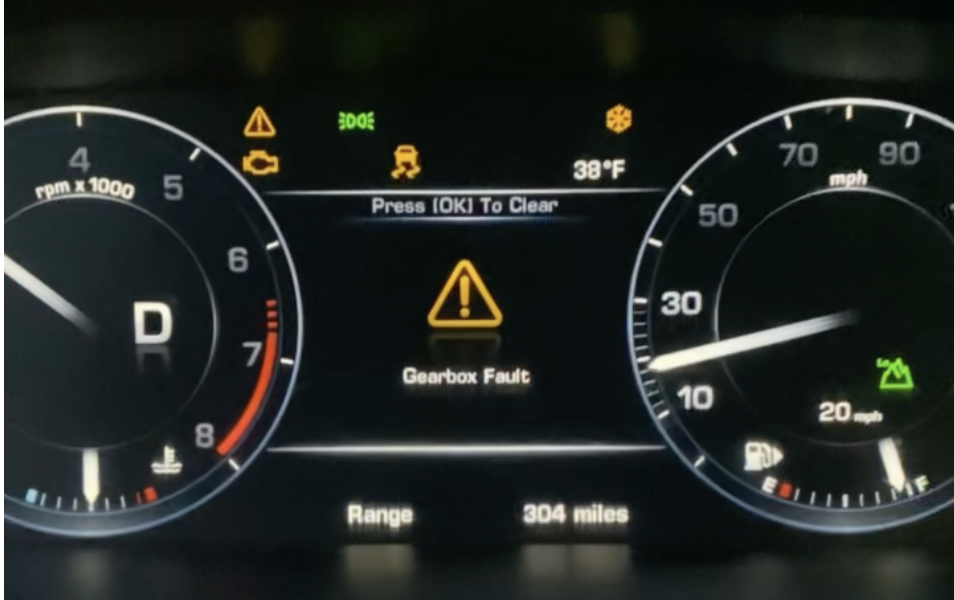
What to do when the engine management light shows on my Range Rover
A practical, no-nonsense guide from the JLR-approved technicians at 4X4 Specialist in Alva — what it means, what to check, when it’s safe to drive, and when to pick up the phone.
The short answer
If the engine management light (EML) on your Range Rover or Land Rover is steady amber and the car is driving normally, you’re usually fine to finish your journey — but get it scanned within the next few days. If the light is flashing, or you have lost power, rough running, smoke or warning chimes, stop somewhere safe and call us on 01786 625624. A flashing EML almost always means a misfire is happening right now, and continuing to drive can destroy the catalytic converter in a short distance — that’s a four-figure repair on most JLR models.
We’re at Alva Industrial Estate, FK12 5DQ — 30 minutes from Stirling, Falkirk, Perth and Glenrothes. Call 01786 625624 and we’ll fit a diagnostic in as soon as we can.
What does the engine management light actually mean?
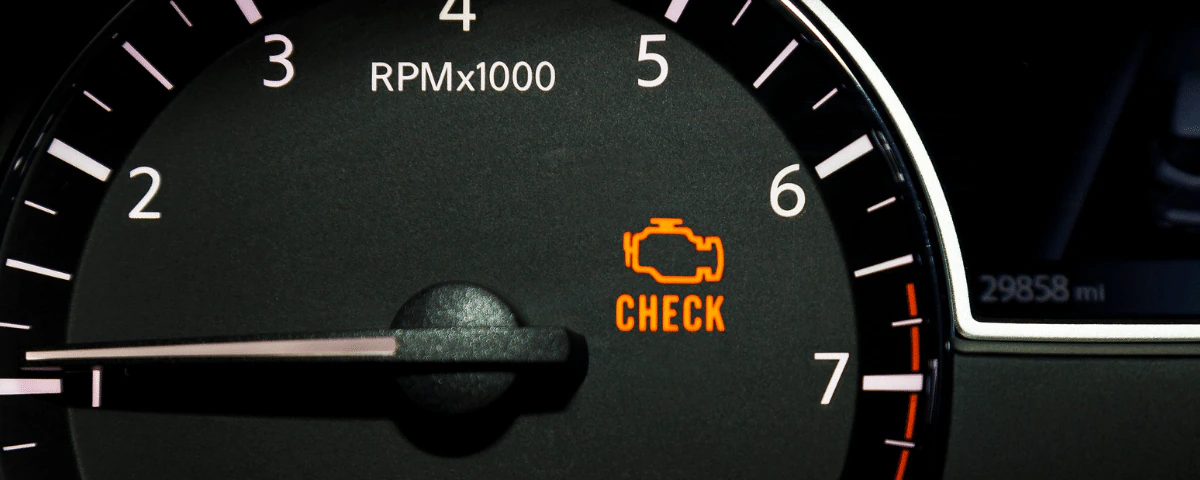
The engine management light — sometimes called the EML, the check-engine light, or the MIL (Malfunction Indicator Light) — is the ECU’s way of telling you that one of the engine’s many sensors or systems has reported a value outside its expected range. It is not a fault in itself; it’s a flag that says “a fault has been logged, please come and read me”.
On a modern Range Rover, Range Rover Sport, Velar, Evoque, Discovery or Defender there are dozens of sensors monitoring fuel, air, exhaust, ignition, emissions and turbo systems. Any one of them can trip the light. The colour and behaviour of the light tells you how serious it is:
- Steady amber: A fault has been logged. The car is in a safe operating mode but needs investigating soon.
- Flashing amber: An active misfire or serious emissions fault. Stop driving as soon as you safely can.
- Red warning + EML together: Something is critically wrong (oil pressure, overheat, etc.). Pull over now.
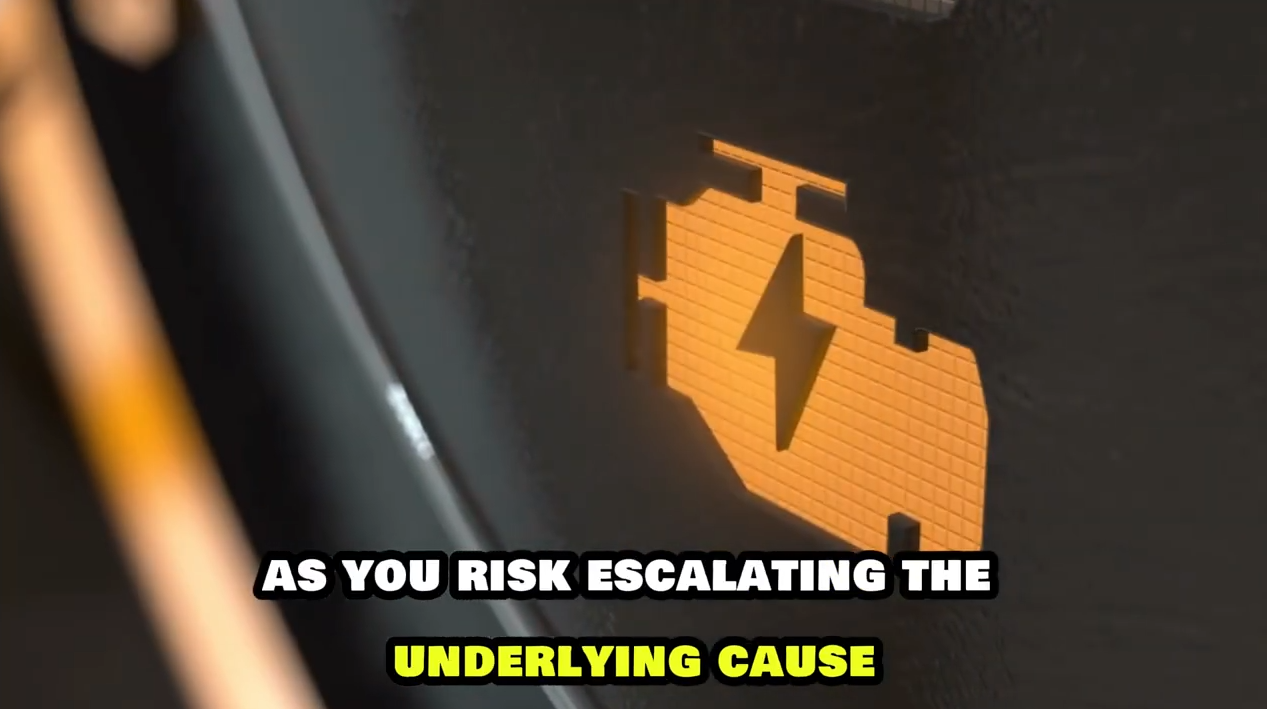
Our JLR-approved diagnostic equipment reads manufacturer-specific codes that generic OBD readers miss.
Five quick checks you can do before you call us
Before you book in, run through these five checks. About one in five EML calls we get is solved by one of these and a short drive cycle:
- Tighten the fuel filler cap properlyA loose or perished cap is the single most common cause of an EML appearing right after a fill-up. Click it shut two or three times and drive 20–30 miles.
- Check your oil and coolant levelsPop the bonnet. If oil is low or coolant is below minimum, top up with the correct grade. Low fluids can trigger sensor faults that look like engine problems.
- Look for obvious leaks or disconnected hosesA vacuum leak from a split hose will set the EML off. Anything dangling, hissing or visibly damaged is worth knowing about before a diagnostic.
- Note when and how the light came onAfter a cold start? Going uphill? Right after fuel? Tell us — these details cut diagnosis time significantly.
- Don’t let anyone clear the codes yetSome garages will clear the light without diagnosing it. That wipes the evidence we need. Bring it to us with the codes intact.
Reasons specific to Range Rover and Land Rover
Across our workshop we see certain faults far more often on JLR vehicles than on other makes. If your EML is on, the cause is statistically most likely to be one of these:
Diesel models (TDV6, TDV8, SDV6, Ingenium D)
- EGR valve sticking — soot build-up causes the valve to stick open or closed. Common on Discovery 4, Range Rover Sport L320 and L494, Defender TD5/Puma.
- DPF regeneration issues — short journeys prevent the diesel particulate filter from regenerating. The EML appears alongside a DPF warning.
- Glow plug failure — usually one or two plugs out of six. Easy to diagnose, cheap to fix early; expensive if you let it strip a thread.
- Turbo actuator faults — the variable-vane turbo actuator on TDV6 engines is a known weak point and a frequent EML cause.
Petrol models (V8, Ingenium P, MHEV)
- Oxygen (lambda) sensor failure — usually post-cat. Cheap part, big effect on fuel economy if ignored.
- Mass-airflow (MAF) sensor — contamination from oily air-filter elements is the usual culprit.
- Coil pack or spark plug failure — typically shows as a flashing EML and rough idle.
- Evaporative emissions (EVAP) leak — fuel cap, purge valve, or a perished hose in the EVAP system.
Oxygen sensors are one of the most common EML triggers across the JLR range — and one of the easiest to misdiagnose.
When to keep driving — and when to stop immediately
This is the part everyone wants to know. Use these as your rules of thumb:
Steady amber EML, no other warnings, no power loss, normal sound and feel, normal temperature gauge. Drive gently, avoid heavy loads or motorway speeds, and book a diagnostic.
Flashing EML, red warning light, loss of power, rough running or misfire, smoke from the exhaust, unusual noises, overheating, or warning chimes. Pull over, switch off, and call us on 01786 625624. Driving a misfiring engine even a few miles can ruin the catalytic converter.
If you’re unsure, err on the cautious side — a recovery to our workshop costs less than a new cat or a destroyed turbo.
What we do at 4X4 Specialist
When you bring your Range Rover or Land Rover to our workshop in Alva, here’s what happens — usually within an hour of arrival:
- JLR-approved diagnostic read. We plug into your OBD port with the same diagnostic tooling JLR main dealers use. We pull all stored and pending codes, plus live-data parameters like fuel trims, lambda voltage, turbo vane position and DPF differential pressure.
- Confirmatory checks. A fault code points us in a direction; it doesn’t always name the failed part. We confirm with physical checks — sensor signals, wiring continuity, vacuum integrity, sometimes a short test drive with the laptop attached.
- Written diagnosis and quote. You get a plain-English explanation of what’s wrong, what’s needed to fix it, and a fixed-price quote before any repair work starts. No surprises.
- Repair using genuine or OE-equivalent parts. We don’t fit cheap pattern parts that fail in six months. Where possible we use genuine JLR or top-tier OE-equivalent components.
- Post-repair verification. We clear the codes, run a road test, and re-scan to make sure nothing has come back. The light stays off — that’s the deal.

Every diagnosis includes a physical inspection — codes alone are never the whole story.
Frequently asked questions
Is it safe to keep driving my Range Rover with the engine management light on?
Will the engine management light reset itself?
What’s the most common cause of the engine management light on a Range Rover?
Can a generic OBD reader tell me what’s wrong?
How much does it cost to diagnose an engine management light at 4X4 Specialist?
Why does the engine management light come on after I’ve filled up with fuel?
Do you need to keep the engine management light on for me to diagnose it?
Where is your workshop and what models do you cover?
Engine management light on? Let’s get it sorted.
Independent, JLR-approved Land Rover and Range Rover specialists at Alva Industrial Estate, FK12 5DQ. Honest diagnosis, fixed-price quotes, the right tools for the job.
Related on 4X4 Specialist
- ‘No Fault Found’ at the Dealer – What to Do When Your Range Rover Still Has a Problem
- All-Terrain Tyres on a Range Rover – What You Gain & What You Give Up
- Read: Best Tyres for a Range Rover – Michelin vs Pirelli vs Continental Compared
→ Range Rover & Land Rover diagnostics · Browse our full Land Rover & Range Rover knowledge base