

Disclaimer: This article is intended for general informational purposes only and is aimed at complete novices. Every situation is unique, and specific details may vary. For accurate and in-depth guidance, please consult a qualified JLR specialist.
Every modern Land Rover is equipped with an On-Board Diagnostics (OBD) system that constantly monitors performance and detects potential issues before they become expensive repairs. But to make informed decisions, you need to understand what these fault codes mean—and when professional diagnosis is essential.
Land Rover diagnostic fault codes help pinpoint specific issues – like the P0010 code suggesting camshaft position actuator circuit problems. Professional diagnostics becomes essential to interpret these codes correctly and avoid misdiagnosis that leads to unnecessary repairs.
This article will help you spot warning signs and understand the diagnostic process to make smart decisions about your Land Rover’s maintenance.
The video below demonstrates how complex a single component can be.
Critical Warning Signs Requiring Immediate Scan
Land Rover vehicles use a smart warning system to let you know about potential problems. You can avoid major mechanical failures that get pricey by learning what these indicators mean.
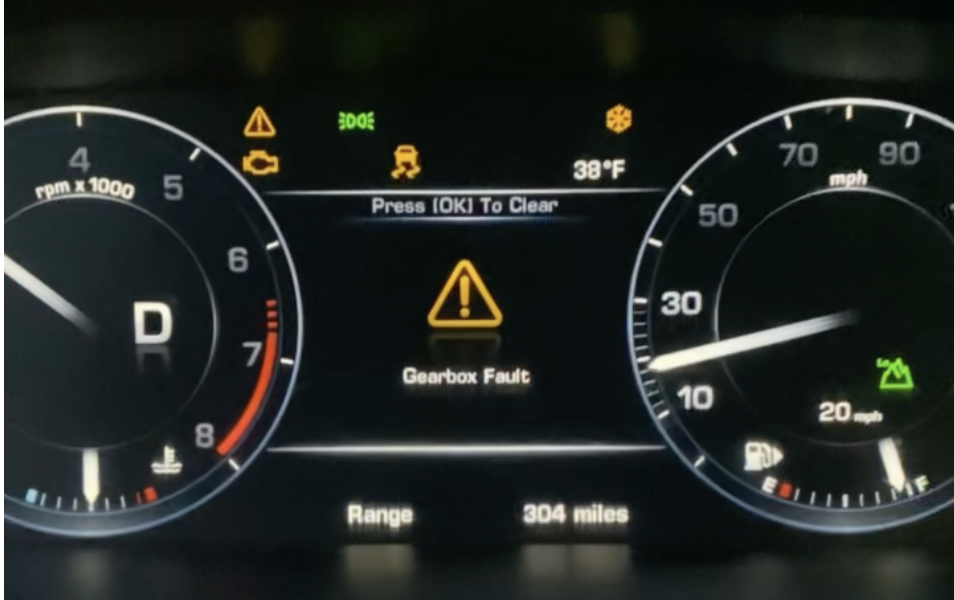
Dashboard Warning Light Patterns
The warning light system uses colours to tell you how serious a problem is. Red warnings needs immediate action and usually mean you should stop your vehicle [1]. These show up for problems like battery charge issues, brake system failures, and dangerous engine temperatures. Amber lights point to less urgent but still important problems that include:
Anti-lock Braking System (ABS) malfunctions
Dynamic Stability Control (DSC) issues
Tire Pressure Monitoring System (TPMS) alerts
Check Engine notifications
Diesel Exhaust Fluid (DEF) warnings [1]
Performance-Related Symptoms
Your engine’s performance problems show up in specific ways. Rough idling with a lit engine management light points to serious mechanical problems [2]. Your vehicle might go into limp mode and slow down by a lot to prevent more damage [2].
The check engine light usually points to emissions problems. The vehicle might then switch to reduced performance mode to protect its key parts [1]. On top of that, glow plug problems in diesel models can affect cold starts and make your engine less efficient [2].
Unusual Vehicle Behavior Indicators
Your Electronic Air Suspension (EAS) system has its own warning signs. We noticed that if your vehicle loses more than 1cm of height within 24 hours, you likely have a big leak in the system [2]. A sudden change in height without you doing anything might mean EAS driver pack failures [2].
Transmission problems often limit your gear functions and show an “E” on the dashboard [3]. The Dynamic Stability Control (DSC) warning light means you have traction or stability system problems that need a professional to check them out [4].
Land Rover Diagnostic Process Breakdown
Modern Land Rover vehicles need sophisticated diagnostic tools to troubleshoot and repair problems accurately. A step-by-step approach will give a precise way to identify faults and fix them quickly.
Original System Assessment
The diagnostic process starts with a detailed electronic vehicle health check that looks at three main areas [5]. Technicians review powertrain performance, steering components, and brake systems first. They check exterior elements like lights, glass, and bodywork next. The assessment then moves to interior features and focuses on control systems and safety components [5].
Code Reading and Interpretation
Specialised equipment connects to the vehicle’s onboard computer system to begin the diagnostic procedure [6]. The tool talks to multiple control modules and gathers live data to analyse system parameters. These diagnostic tools decode specific markers that show exactly what and where the problems are [6].
Component Testing Sequence
A well-laid-out testing sequence has these steps:
Engine and transmission performance review
Brake system and ABS functionality checks
Suspension and steering component assessment
Electronic system verification and software updates [7]
Technicians employ advanced equipment like pressure gages, oscilloscopes, and specialised testing devices for a detailed component review [8]. They analyse this data to check system efficiency and spot any problems [6].
Verification Procedures
The final phase uses a ‘traffic light style’ reporting system that groups problems by severity [5]:
Green: Components functioning as designed
Amber: Maintenance required before next service
Red: Critical repairs needed immediately
After repairs, technicians run component activation trials, recalibrate sensors, and test system functions [6]. Without doubt, this detailed verification process makes sure all repairs match manufacturer specifications and keeps the vehicle reliable.

Common Diagnostic Misinterpretations
Land Rover’s diagnostic fault codes don’t always tell the whole story. Mechanics must carefully check and interpret these codes. You must know what diagnostic systems can and cannot do to get the right diagnosis.
False Code Readings
Sensor data reliability are the foundations of getting diagnostics right. Bad sensor readings can make codes pop up that don’t match what’s really wrong with the vehicle [7]. Some error codes might just be system glitches instead of real mechanical problems [9].
This happens a lot after regular maintenance if someone forgets to reset the computer. Mechanics who skip the system reset after oil changes will see false oil warnings [9]. The same thing happens with battery voltage changes. These can trigger codes that make it look like electronic parts are failing when they’re fine.
Getting accurate diagnostics depends on a few key things:
The right tool that works with your Land Rover model
Updated software and proper communication protocols
Good condition of the OBD port and cables
A well-charged vehicle battery [9]
Multiple Code Scenarios
Modern vehicles with complex systems often show several fault codes at once. This makes diagnosis tricky. A Range Rover Evoque study showed seven different codes that came up together. These ranged from camshaft position problems to turbocharger issues [10].
Multiple codes need a step-by-step analysis. One problem usually sets off a chain reaction of related codes [11]. Here’s what to look for:
Primary Fault: The actual mechanical or electrical problem
Secondary Codes: How systems react to the main fault
Communication Errors: Problems from connected systems
Good mechanics know that new parts aren’t always the answer. A full picture often shows that one issue causes many warning lights [12]. A timing problem can mess up fuel injection, valve operation, and exhaust systems all at once [12].
Professional diagnostic tools help make sense of multiple codes. These can read manufacturer-specific codes, like the ‘P1’ codes that Land Rovers use [13]. They also spot connections between codes that seem unrelated. This helps avoid unnecessary parts replacement and saves money on repairs.
Expert vs DIY Diagnosis Comparison
Professional diagnostic equipment for Land Rovers works at a completely different level than consumer-grade tools. Simple OBD scanners give general fault code readings. Professional diagnostic systems can access manufacturer-specific modules and handle advanced functions [14].
Tool Capability Differences
Professional Land Rover diagnostic equipment goes way beyond the reach and influence of basic code readers. Service centres employ specialised tools like Pathfinder or Topix Cloud System that provide:
Sensor value readings and system function commands
Module reprogramming capabilities
Special testing functions
Air suspension calibration
Transmission adaptation resets [14]
Basic DIY scanners that cost between £50 to £200 have limited functionality [1]. These tools work well enough to read standard engine codes and do simple diagnostics.
Diagnostic Accuracy Rates
Professional diagnostic equipment shows better accuracy when identifying faults. DIY tools can spot simple problems but often miss why it happens or give incomplete diagnoses [15]. Professional technicians use state-of-the-art diagnostic tools to find even subtle malfunctions that basic scanners can’t detect [15].
Companies like Halfords or kwik fit will offer diagnostics for around £50 however, they tend to fall into the trap mentioned above with tool capabilities. For a detailed, precise report, expect to pay between £200 – £300 from a reliable JLR specialist.
Long-term Cost Implications
DIY diagnostics might seem economical at first but can get pricey over time. Professional diagnostics need higher upfront costs but prevent expensive repairs through:
Early problem detection
Accurate fault identification
Proper repair guidance
Warranty protection [17]
Professional diagnostic services keep vehicle warranties valid and meet manufacturer standards [17]. DIY tools save money right away, but professional diagnostics work better economically over time by preventing wrong diagnoses and repair complications [1].
Your choice between DIY and professional diagnostics depends on your mechanical skills and available tools. Reading simple fault codes suits DIY enthusiasts. Complex electronic issues need professional expertise [1]. Professional workshops use advanced diagnostic equipment that goes beyond standard OBD scanners to ensure complete problem identification and fixes [17].

Warranty Considerations in Fault Diagnosis
Your Land Rover’s warranty plays a vital role in diagnosis and repair decisions. You need to know the warranty terms to protect your investment and keep your vehicle reliable.
Manufacturer Warranty Requirements
Land Rover gives you a detailed manufacturer warranty that covers unlimited mileage for three years [4]. The first-party warranty covers free repairs and roadside assistance. Trained technicians use genuine Land Rover parts for all repairs [4].
The warranty claim process needs you to:
Visit an Approved Service Center with service history documents
Get standard issues fixed right away
Get Land Rover’s approval before complex repairs [4]
You get a grace period of one month or 1,000 miles beyond scheduled service dates with the manufacturer’s warranty [4]. This flexibility lets owners keep their coverage while they schedule service appointments.
Third-Party Warranty Implications
Land Rover gives you a detailed manufacturer warranty that covers unlimited mileage for three years [4]. The first-party warranty covers free repairs and roadside assistance. Trained technicians use genuine Land Rover parts for all repairs [4].
The warranty claim process needs you to:
Visit an Approved Service Center with service history documents
Get standard issues fixed right away
Get Land Rover’s approval before complex repairs [4]
You get a grace period of one month or 1,000 miles beyond scheduled service dates with the manufacturer’s warranty [4]. This flexibility lets owners keep their coverage while they schedule service appointments.

Summary
Land Rover fault codes help vehicles communicate with their owners. A good grasp of these codes and expert interpretation will help owners stop small problems from turning into major mechanical failures.
Professional diagnostic services are worth much more than simple code readings. DIY tools can give you quick insights into your vehicle’s health. However, qualified technicians use advanced diagnostic equipment that gives a detailed analysis of all systems. This helps them spot problems that basic scanners often miss.
Your warranty coverage plays a big role in choosing diagnostic services. Both manufacturer and third-party warranties just need proper records and regular maintenance checks. Getting professional diagnosis protects your warranty and helps maintain your vehicle’s value over time.
Your choice between DIY and professional diagnosis will impact repair costs. DIY tools might seem affordable at first. Professional diagnostic services help you avoid expensive repairs by finding faults accurately and catching problems early. Land Rover owners can keep their vehicles running well and avoid unnecessary parts and labour costs.